If you're seeking efficient and trustworthy freight shipping from Germany to Argentina, FWFreight is the solution for you. With a profound understanding of the local and international logistical landscape, our range of core services from sea, air, rail, truck, to forwarding services will undoubtedly meet your specific needs. Our intimate knowledge of logistics combined with our extensive logistics and transportation network forms a solid foundation for effective international shipping from Germany. Exporters, importers, and diverse clients across the globe rely on our solutions, ensuring their business continuity, and adding value to their supply chain management.
When it comes to service excellence, FWFreight stands second to none. Leveraging our extensive expertise, we can guarantee the highest level of customer satisfaction in every engagement. We take pride in being more than just a logistics provider. We are, indeed, your strategic partner providing personalized solutions and an unparalleled level of service with every shipment. From careful handling of goods to delivering them in a timely manner, each task is executed with utmost precision and professionalism, making us the preferred choice for businesses seeking world-class logistic support.
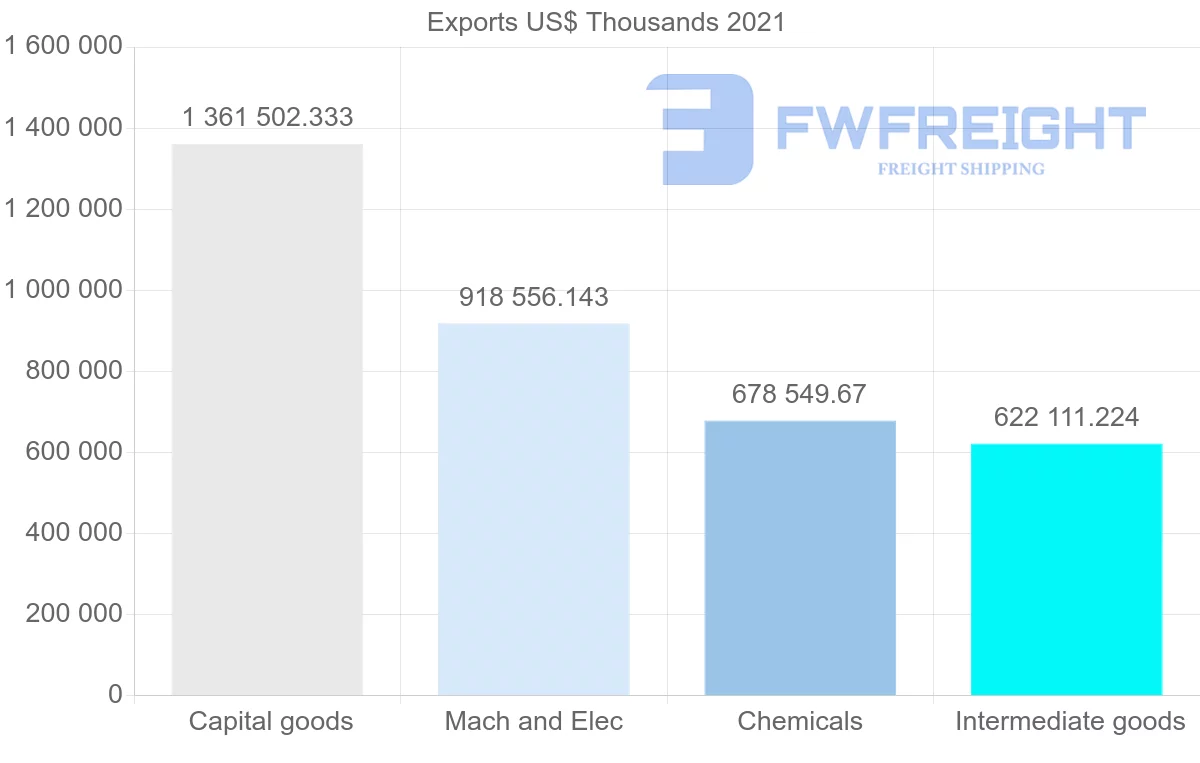 The top 5 export goods from Germany to Argentina in 2021 were capital goods, machinery and electronics, chemicals, and intermediate goods. Capital goods had the highest export value at $1,361.5 million, followed by machinery and electronics at $918.6 million, chemicals at $678.5 million, and intermediate goods at $622.1 million. These goods play a crucial role in driving the trade between the two countries.
Exports in these categories are important to Germany as they represent high-value products that contribute significantly to the country's economy. The main regions in Germany where these goods are produced include Bavaria, North Rhine-Westphalia, and Baden-Württemberg. These regions are known for their strong manufacturing industries and technological advancements, which enable them to produce high-quality goods for export.
In Argentina, these goods are important for import as they help to drive the country's industrial development and meet the demand for advanced machinery, chemicals, and intermediate goods. The main regions in Argentina where these goods are supplied include Buenos Aires, Córdoba, and Santa Fe. These regions are key economic centers in the country, where industries rely on imported goods to support their production processes and drive economic growth.
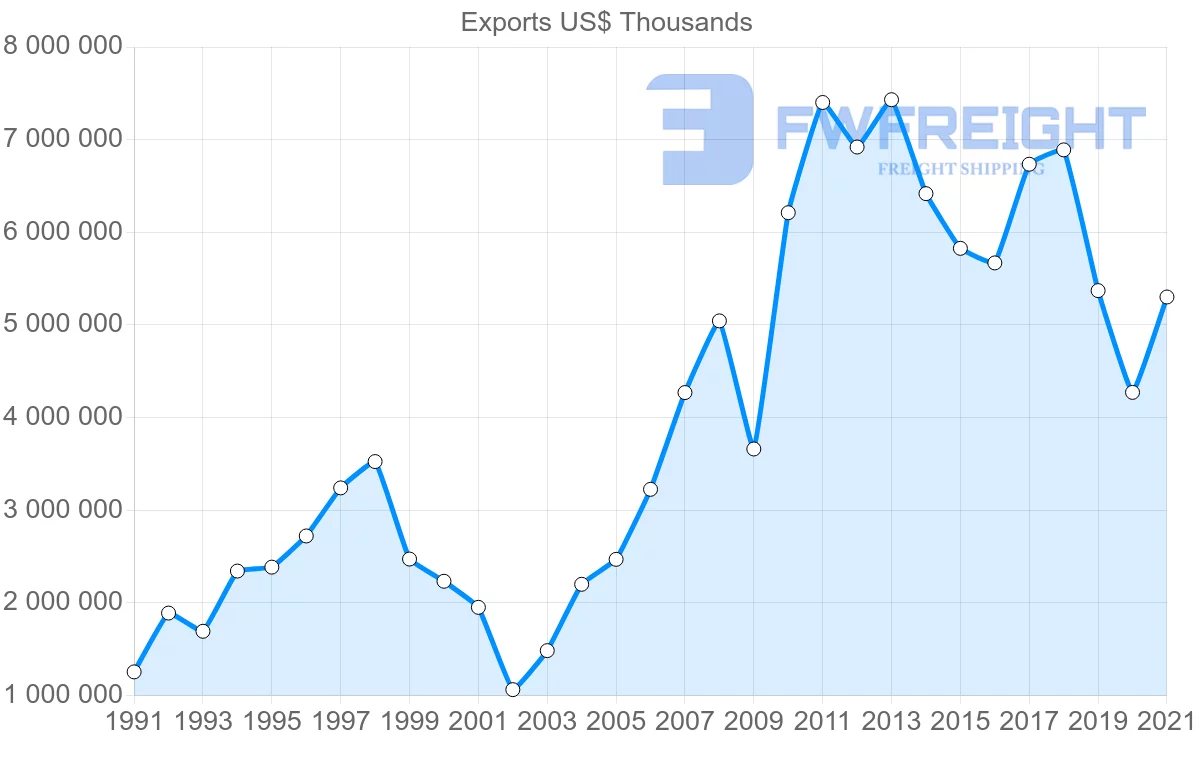 The graph shows the All Product Export from Germany to Argentina over the past 30 years, with values ranging from 1.06 billion US dollars to 7.40 billion US dollars. The trade relationship between the two countries has seen significant fluctuations over the years, with a peak in exports in 2011 and a slight decrease in recent years. The most notable increase occurred between 2009 and 2011, where exports nearly doubled from 3.66 billion to 7.40 billion US dollars. The largest decrease in exports was seen in 2002, dropping from 2.47 billion to 1.06 billion US dollars.
In terms of product groups exported from Germany to Argentina, the main categories include machinery, vehicles, chemical products, and electrical equipment. Machinery and vehicles make up a significant portion of the exports, with Germany's high-quality engineering and manufacturing industries contributing to these exports. Chemical products also play a major role in the trade relationship, highlighting the importance of the chemical industry in both countries. Electrical equipment exports have also seen growth in recent years, as technology continues to advance and demand for electronics increases. Overall, these product groups demonstrate the strong trade ties between Germany and Argentina, with a diverse range of goods being exchanged between the two countries.
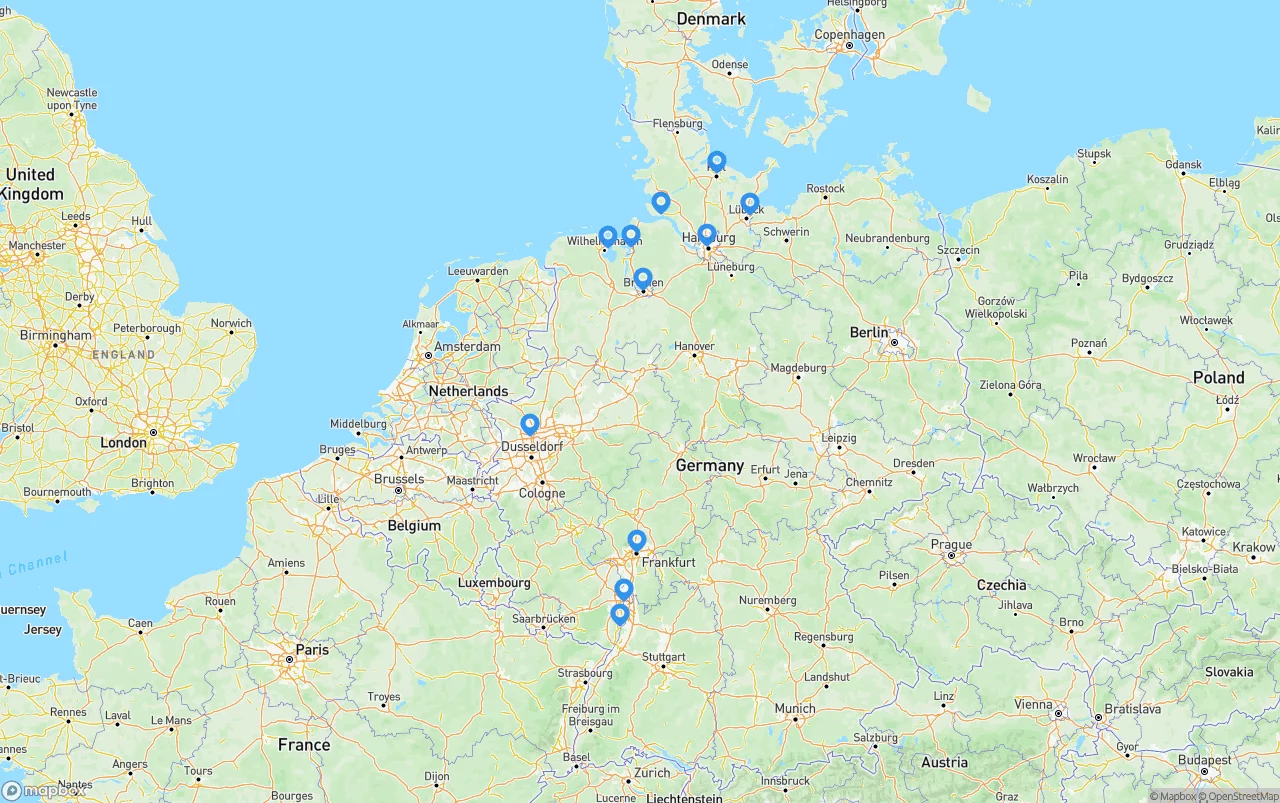 - Hamburg Port: Hamburg Port is the largest port in Germany and the third-largest in Europe. It is a major hub for container shipping, handling over 9 million TEUs annually. The port also handles a significant amount of general cargo, bulk cargo, and cruise ship traffic.
- Bremerhaven Port: Bremerhaven Port is a key port for Germany's automotive industry, with a dedicated terminal for vehicle exports. It is also an important hub for container shipping, handling around 5 million TEUs each year. The port is well-connected to inland transportation networks by road and rail.
- Bremen Port: Bremen Port is located on the Weser River and serves as an important gateway to northern Europe. It is a major hub for container shipping, handling over 4 million TEUs annually. The port also handles a diverse range of cargo, including bulk cargo and project cargo.
- Kiel Port: Kiel Port is the busiest passenger port in Germany, serving as a major ferry terminal for travel to Scandinavia and the Baltic states. The port also handles a variety of cargo, including containers, bulk cargo, and RoRo traffic. Kiel is an important hub for both passenger and cargo transportation.
- Duisburg Port: Duisburg Port is the largest inland port in Europe, located on the Rhine River. It is a key hub for container shipping, handling over 3 million TEUs annually. The port is well-connected to major European markets by inland waterways and rail, making it a vital link in the supply chain.
Other ports in Germany include BRUNSBUETTEL Port, FRANKFURT AM MAIN Port, Germersheim Port, LUBECK Port, Mannheim Port, and Wilhelmshaven Port. Each of these ports plays a unique role in Germany's maritime and inland transportation networks.
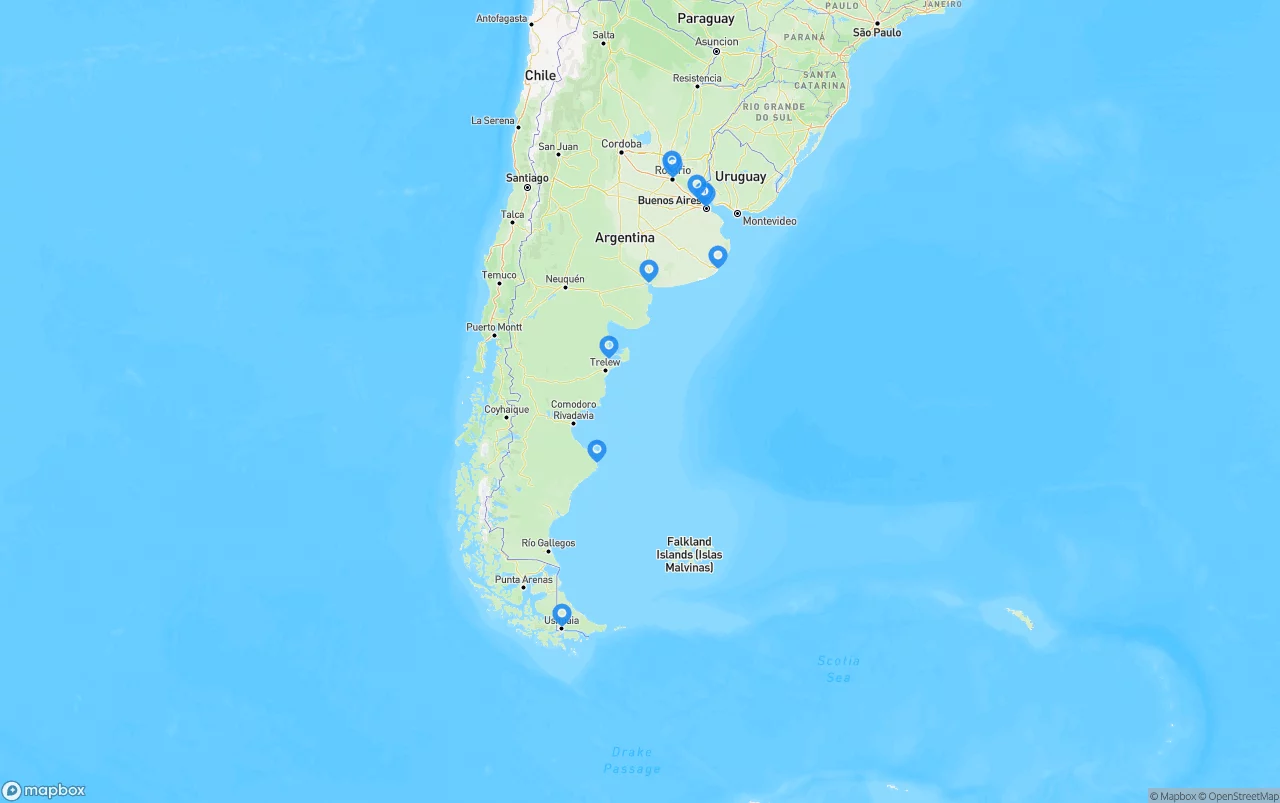 - Buenos Aires Port: Buenos Aires Port is the largest port in Argentina and one of the busiest in South America. It is located on the Rio de la Plata and handles a wide range of cargo, including containers, bulk commodities, and general cargo. The port is equipped with modern facilities and has excellent connectivity to road and rail networks.
- Bahia Blanca Port: Bahia Blanca Port is strategically located in the south of Buenos Aires province. It is a major hub for the export of agricultural products, petroleum, and chemicals. The port has modern infrastructure and deep-water berths that can accommodate large vessels.
- Mar del Plata Port: Mar del Plata Port is a key fishing port in Argentina and one of the largest in Latin America. It handles a significant volume of seafood products for both domestic consumption and export. The port also has facilities for general cargo and cruise ships.
- Rosario Port: Rosario Port is situated on the Parana River and is an important export gateway for agricultural products, particularly soybeans, wheat, and corn. The port has modern grain terminals and is well-connected to the country's agricultural heartland.
- San Lorenzo Port: San Lorenzo Port is located near Rosario and specializes in the handling of grains and oilseeds. It is a key export point for agricultural commodities produced in the region. The port has efficient loading facilities and is crucial for the country's export economy.
Other ports in Argentina: Puerto Deseado Port, Puerto Madryn Port, Santa Fe Port, Ushuaia Port, Zarate Port.
Looking for a freight forwarder in Germany and Argentina? There is a list of the best freight forwarders, cargo agents, air, sea, land, river, railroad transport companies, logistics, brokers cargo services in Germany and Argentina. Elevate your business's supply chain effectiveness by selecting the ideal freight forwarding partner.
Maximize your logistics efficiency between Germany and Argentina by partnering with premier freight forwarders. These expert forwarders invest time to deeply understand your unique shipping requirements. Through a personalized and meticulous approach, they guarantee seamless shipment execution across borders, ensuring timely arrivals at every destination.
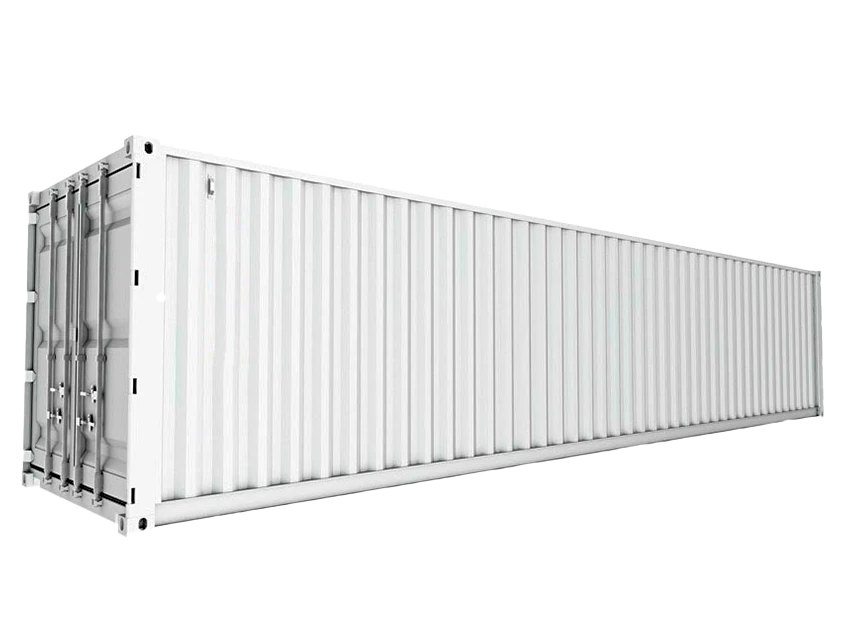
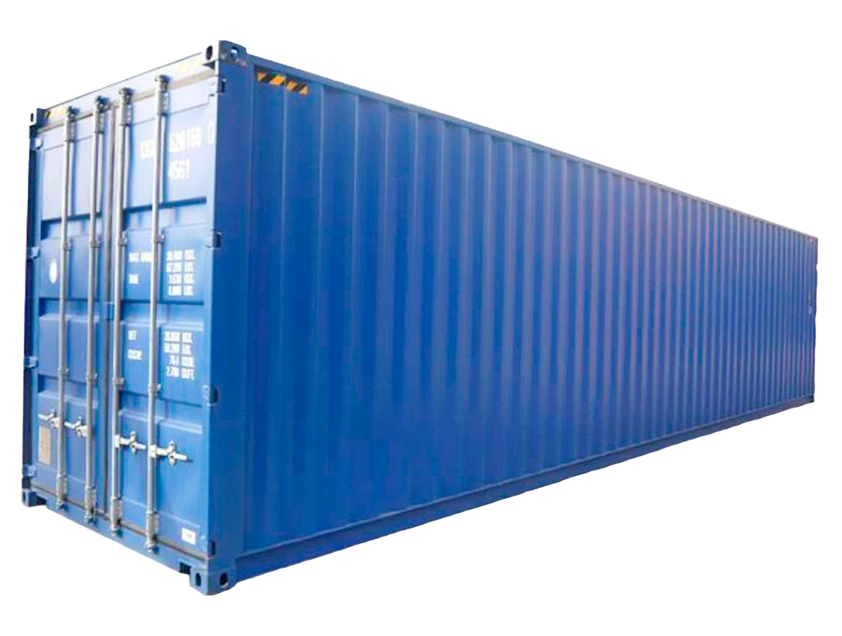
At FWFreight, we offer comprehensive international container shipping services tailored to meet your needs. We provide efficient and reliable shipping solutions from Germany to Argentina. Here's a breakdown of our shipping options:
LCL from Germany to Argentina (Less than Container Load):
For smaller shipments that don't fill an entire container, our LCL service is the perfect solution. We consolidate multiple shipments into one container, saving you time and money. With regular departures to Argentina from Germany. Your cargo will reach its destination securely and on schedule.
FCL from Germany to Argentina (Full Container Load):
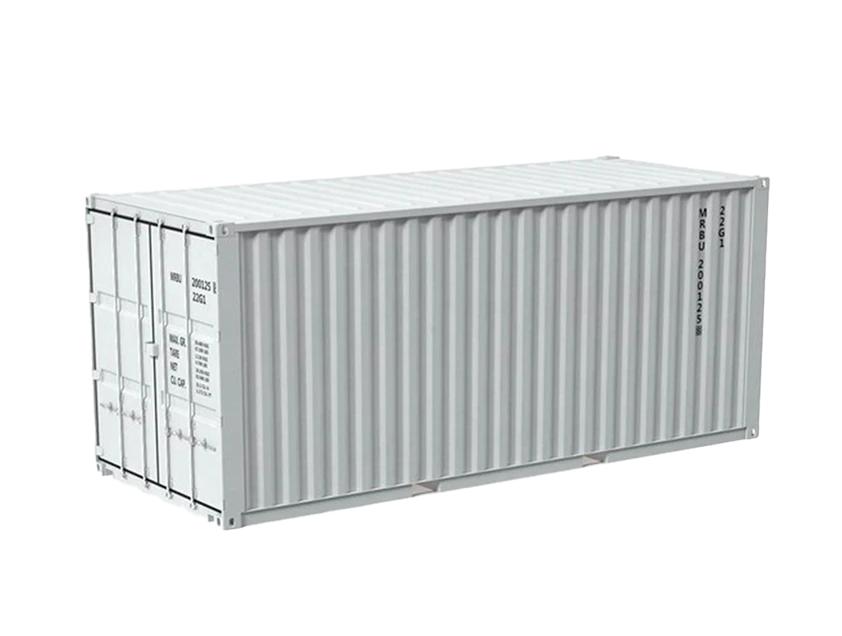
If you have enough cargo to fill a whole container, our FCL service offers exclusive use of a container. This ensures your goods remain secure and minimizes the risk of damage during transit. Choose to 20 FT, 40 FT, or 40 HC containers, depending on the volume and nature of your cargo.
Air Freight from Germany to Argentina:
When time is of the essence, our air freight service provides swift delivery for urgent shipments. With extensive networks and partnerships, we guarantee efficient handling and timely delivery of your cargo to Argentina to destinations across the globe.
Below is a table with Shipping Rates from Germany to Argentina for various types of containers. You can use these Quick Quotes from Germany to Argentina as a guideline. To get an Instant Rate from Germany to Argentina for the necessary date, you can send a request.
For container transportation from Germany to Argentina, various factors come into play. The size of the shipping container, the type of goods to be shipped, distance of the destination, and the shipping method (either Full Container Load or Less than Container Load) all directly affect the cost.
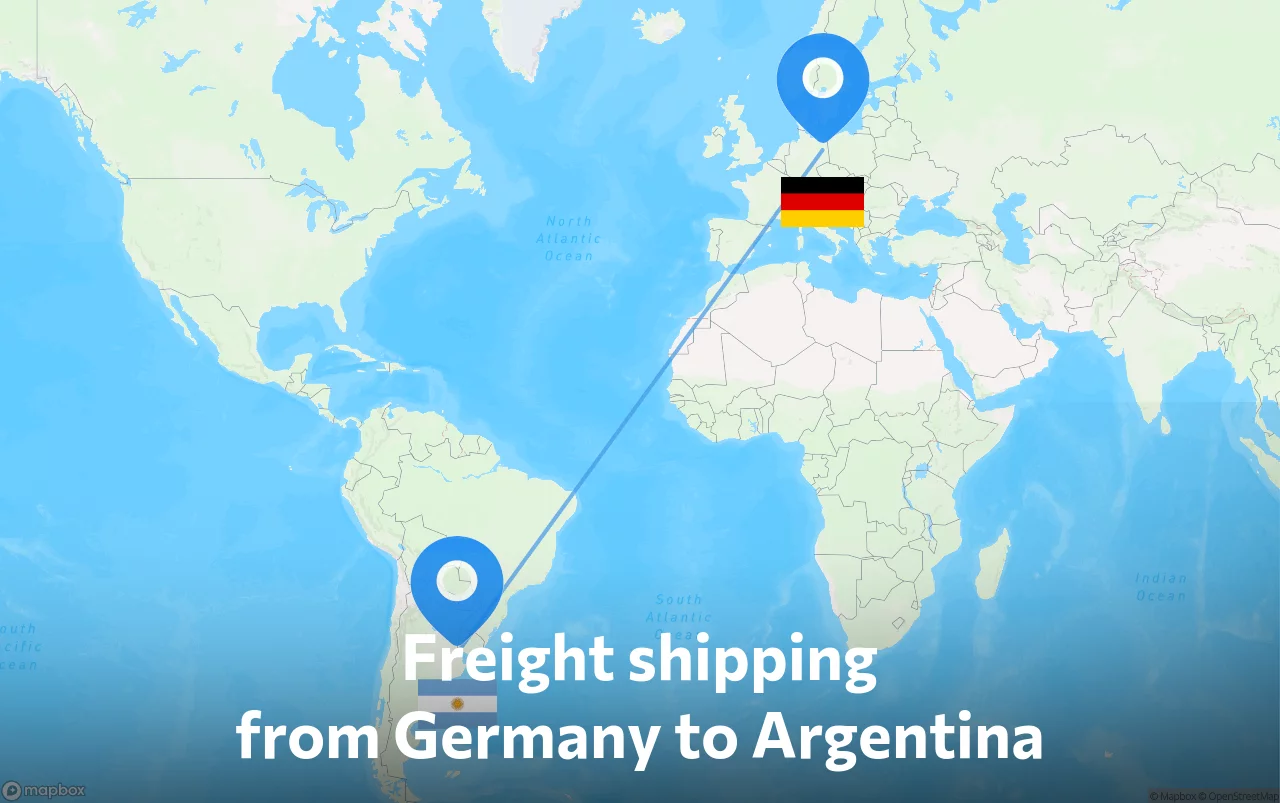 On average, shipping cargo from Germany to Argentina via sea freight can take anywhere from 4 to 6 weeks. The exact transit time will depend on factors such as the specific ports of departure and arrival, the distance between the two countries, and the efficiency of the logistics operations involved. The route from Germany to Argentina is a long-distance one, which means that longer transit times should be expected compared to routes within the same region. Additionally, factors such as weather conditions, port congestion, and scheduling conflicts can also impact the overall transit time of cargo shipments.
Customs clearance plays a crucial role in the shipping process from Germany to Argentina, as delays in this stage can significantly impact the overall shipping time. In Germany, customs clearance is generally efficient and can take around 1-3 days on average. In Argentina, however, customs clearance processes can be more time-consuming, with an average delay of 5-7 days. To mitigate these potential delays, shippers are advised to work with experienced logistics partners who are familiar with the customs regulations in both countries. By partnering with a reliable company like FWFreight, which specializes in transport services on the Germany to Argentina route, shippers can ensure smoother customs clearance processes and reduce the risk of shipping delays.
 As a leading player in the global freight forwarding industry, FWFreight specializes in freight shipping to Argentina from locations around the world. Our core services are broad, encompassing sea, air, rail, and truck shipments. We pride ourselves on providing an unsurpassed level of care and professionalism to all our customers, ensuring their cargo arrives promptly and safely. We understand that each shipment is unique, requiring individual attention and a tailored solution. So, whether you're a domestic exporter looking for the most efficient route to Argentina, or an importer seeking a reliable logistics partner for international shipping to Argentina from other countries, FWFreight is the right choice for meeting your needs.
Our company stands out from the competition through our unwavering commitment to exceed client expectations in every aspect of our service delivery. From first contact to final delivery, we strive to provide the best service in the world, with an emphasis on clear communication, prompt response, and meticulous attention to detail. Apart from our comprehensive logistics services spanning air, sea, rail, and truck, we also offer tailored forwarding services to cater to the specific requirements of our diverse clientele. Regardless of the size, nature, or destination of your cargo, our shipping company assures you of a seamless and cost-effective shipping experience. Partner with us, and let us turn your logistics challenges into success stories.