FWFreight is your premier destination for freight shipping from Saudi Arabia to Nigeria, offering a comprehensive suite of logistics services designed to fulfill the varied shipment needs of businesses both large and small. Our company is adept at managing shipments across land, sea, air, or rail, making us uniquely equipped to handle any logistics challenge with precision, reliability, and efficiency. Whether it's domestic exporters seeking to move their products across borders or international importers looking to receive goods from Nigeria, FWFreight provides seamless, tailored solutions that ensure swift, secure, and efficient freight movement.
From a service perspective, our company stands out in the fiercely competitive world of logistics, making us a prominent figure in international shipping from Saudi Arabia. We are committed to delivering unrivaled service quality, personalized to meet the unique demands of each client. Leveraging our global network, advanced technology, and seasoned expertise, we orchestrate flawless logistics operations, ensuring seamless workflow from the initial pick-up to the final delivery point. Regardless of shipment size or destination, our proficient teams strive to provide the best service in the world, transforming complex logistics challenges into stress-free experiences for every customer.
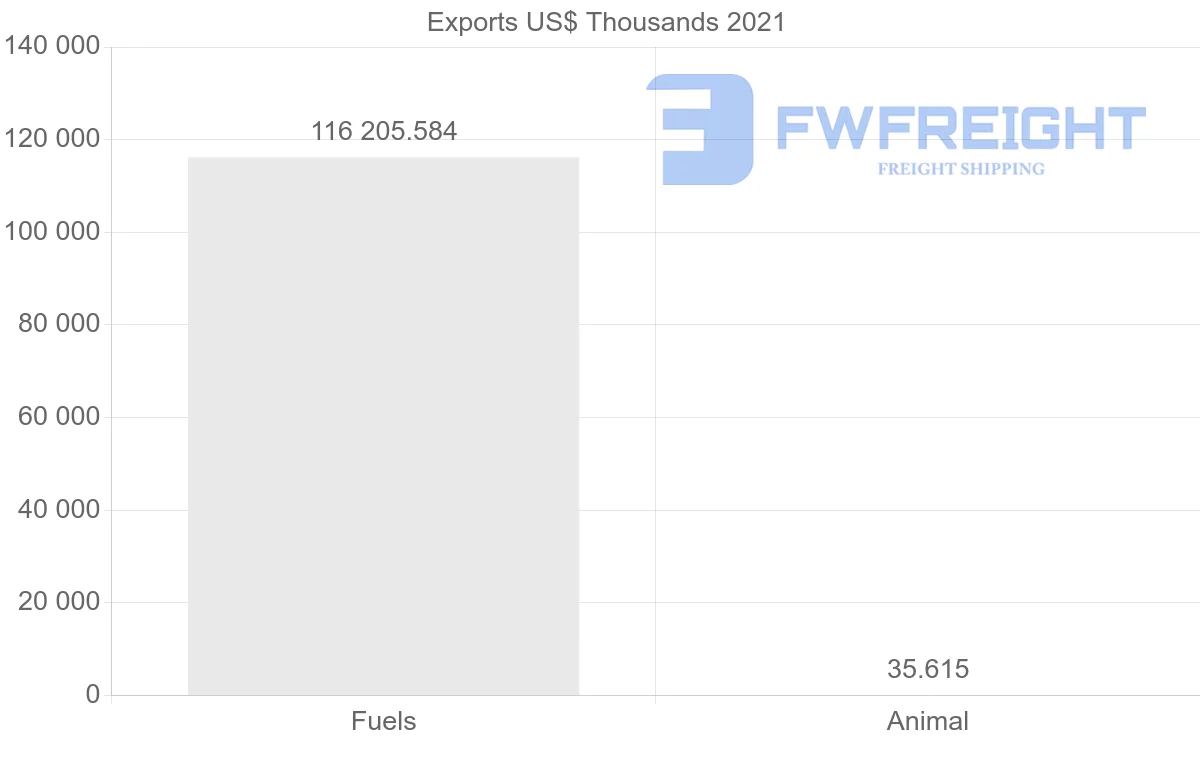 The top 5 export goods from Saudi Arabia to Nigeria in 2021 were dominated by fuels, with a total value of $116.21 million, making up the majority of the export volume. Animal products followed with a value of $35.62 million. Within the fuels category, petroleum and related products likely made up a significant portion of the export value, given Saudi Arabia's status as a major oil producer. In terms of animal products, items such as meat, dairy, and eggs could have contributed to this export category.
Exports in these categories are crucial for Saudi Arabia due to the country's heavy reliance on oil revenues. The production of fuels such as petroleum provides a significant source of income for the Saudi economy, supporting various industries and infrastructure projects. Regions such as the Eastern Province, home to the majority of Saudi Arabia's oil reserves, are likely key areas for the production and export of fuels. Similarly, regions with strong agricultural sectors, such as Al-Qassim and Riyadh, may contribute significantly to the production of animal products for export.
These goods are important for import into Nigeria as the country relies heavily on fuel imports to meet its energy needs. Nigeria's limited refining capacity means that it must import petroleum products to satisfy domestic demand, making Saudi Arabia a key supplier. Animal products are also essential for Nigeria's food security, as the country's growing population requires a steady supply of protein-rich foods. Regions such as Lagos and Kano are major hubs for the import and distribution of these goods within Nigeria, supporting the country's economic and social development.
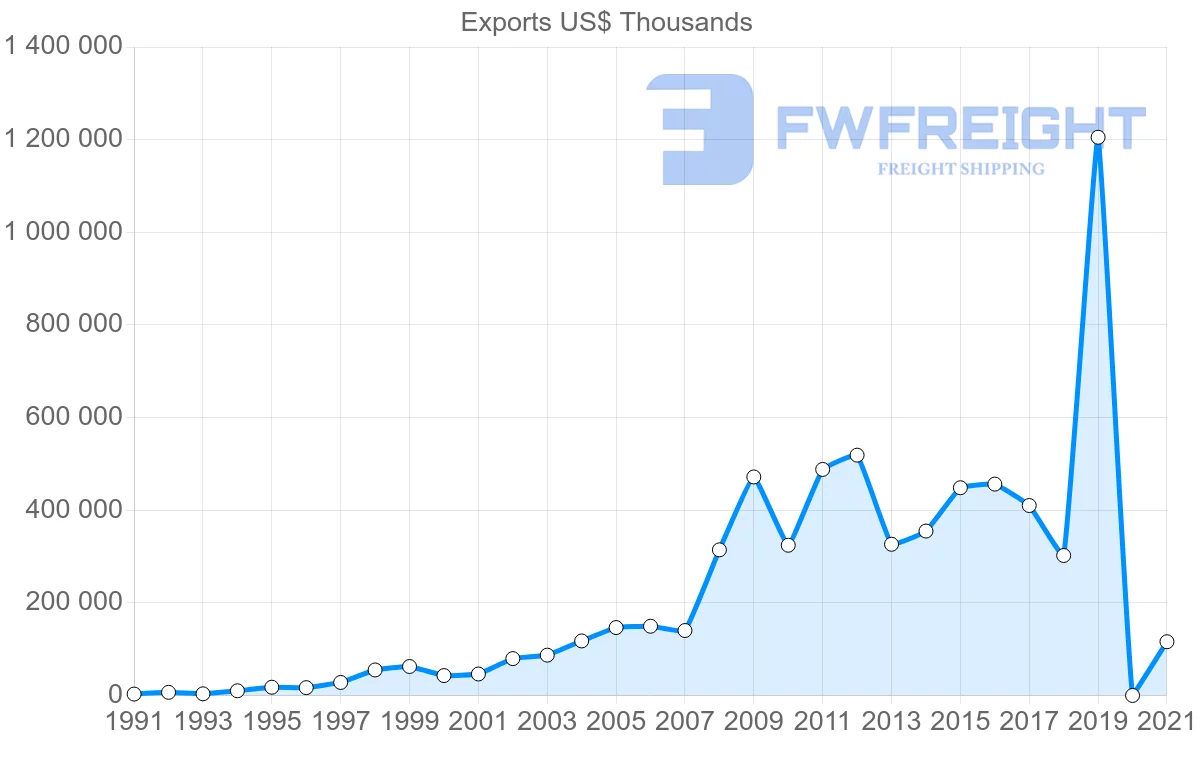 Over the past 30 years, the trade relationship between Saudi Arabia and Nigeria has seen significant growth and fluctuation. The total value of all product exports from Saudi Arabia to Nigeria has increased steadily from 1991 to 2021, with some notable spikes and drops along the way. In 1991, the total export value was 3,317.646 million USD, which gradually increased to 149,725.480 million USD in 2006, before dropping to 116,241.199 million USD in 2021. This represents a fluctuation of over 129,000 million USD over the 30-year period. The most significant growth occurred between 2001 and 2011, where the export value more than doubled from 46,614.891 million USD to 471,959.267 million USD. However, there was a significant decline in exports between 2011 and 2021, where the export value dropped by over 355,000 million USD.
In terms of product groups exported from Saudi Arabia to Nigeria, the main categories include petroleum and petroleum products, machinery, vehicles, electronics, and chemicals. Petroleum and petroleum products make up the majority of exports, given Saudi Arabia's status as a major oil-producing country. Machinery and vehicles also constitute a significant portion of exports, reflecting Nigeria's growing infrastructure and transportation needs. Electronics and chemicals are also prominent export categories, highlighting Nigeria's increasing industrialization and technological development. Overall, the trade relationship between Saudi Arabia and Nigeria is characterized by the exchange of essential goods and resources that support the economic growth and development of both countries.
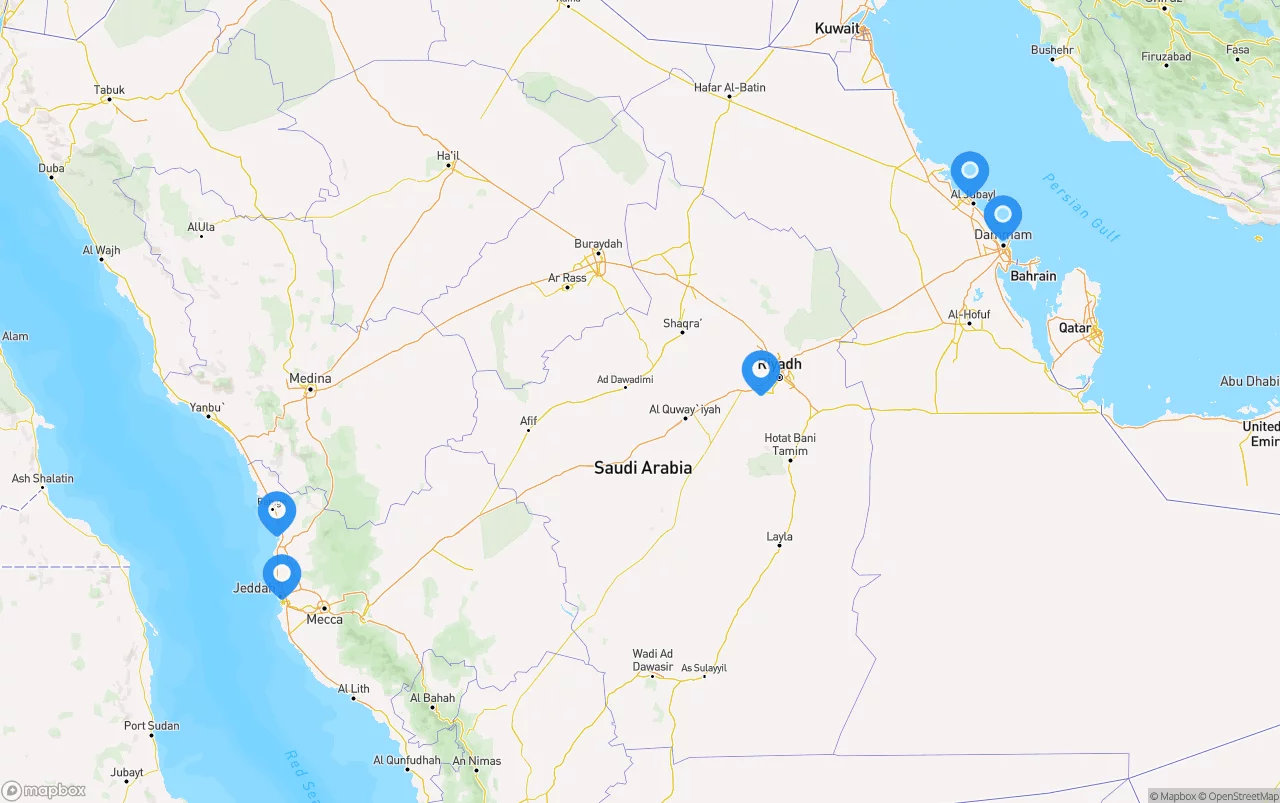 Dammam Port: Dammam Port is the largest port in the Eastern Province of Saudi Arabia and is strategically located on the Arabian Gulf. It is a key gateway for trade between Saudi Arabia and the rest of the world. The port has modern facilities and infrastructure to handle various types of cargo including containers, bulk, and general cargo. Dammam Port plays a crucial role in the country's economy by facilitating the import and export of goods.
Jeddah Port: Jeddah Port is the largest seaport in the Red Sea and is a major gateway for trade to and from Saudi Arabia. It is located in the western part of the country and serves as a vital link between the Middle East, Africa, and Europe. Jeddah Port is equipped with state-of-the-art facilities for handling containers, bulk cargo, and oil shipments. It plays a crucial role in facilitating the transportation of goods to and from the Kingdom.
Jubail Port: Jubail Port is located on the Arabian Gulf and is one of the busiest ports in Saudi Arabia. It is a key hub for petrochemical exports and plays a significant role in the country's industrial development. Jubail Port has specialized terminals for handling oil, gas, and chemical products. It also has excellent facilities for handling containers and general cargo. The port is an important gateway for the export of petrochemical products to international markets.
King Abdullah Port: King Abdullah Port is a state-of-the-art container port located in King Abdullah Economic City on the Red Sea coast. It is one of the newest and most modern ports in Saudi Arabia, equipped with cutting-edge technology and infrastructure. King Abdullah Port has the capacity to handle large container vessels and is strategically positioned to serve as a transshipment hub for the region. The port plays a crucial role in enhancing Saudi Arabia's maritime connectivity and trade competitiveness.
Riyadh Port: Riyadh Port is a inland dry port located in the capital city of Riyadh. It serves as a key logistics hub for the central region of Saudi Arabia, providing connectivity to the country's major cities and industrial centers. Riyadh Port primarily handles containerized cargo, providing efficient transport and distribution services to businesses in the region. The port plays a vital role in supporting the growth of trade and commerce in the central part of the Kingdom.
Other ports in Saudi Arabia include: Yanbu Port, Yanbu Industrial Port, Jizan Port, Ras Tanura Port.
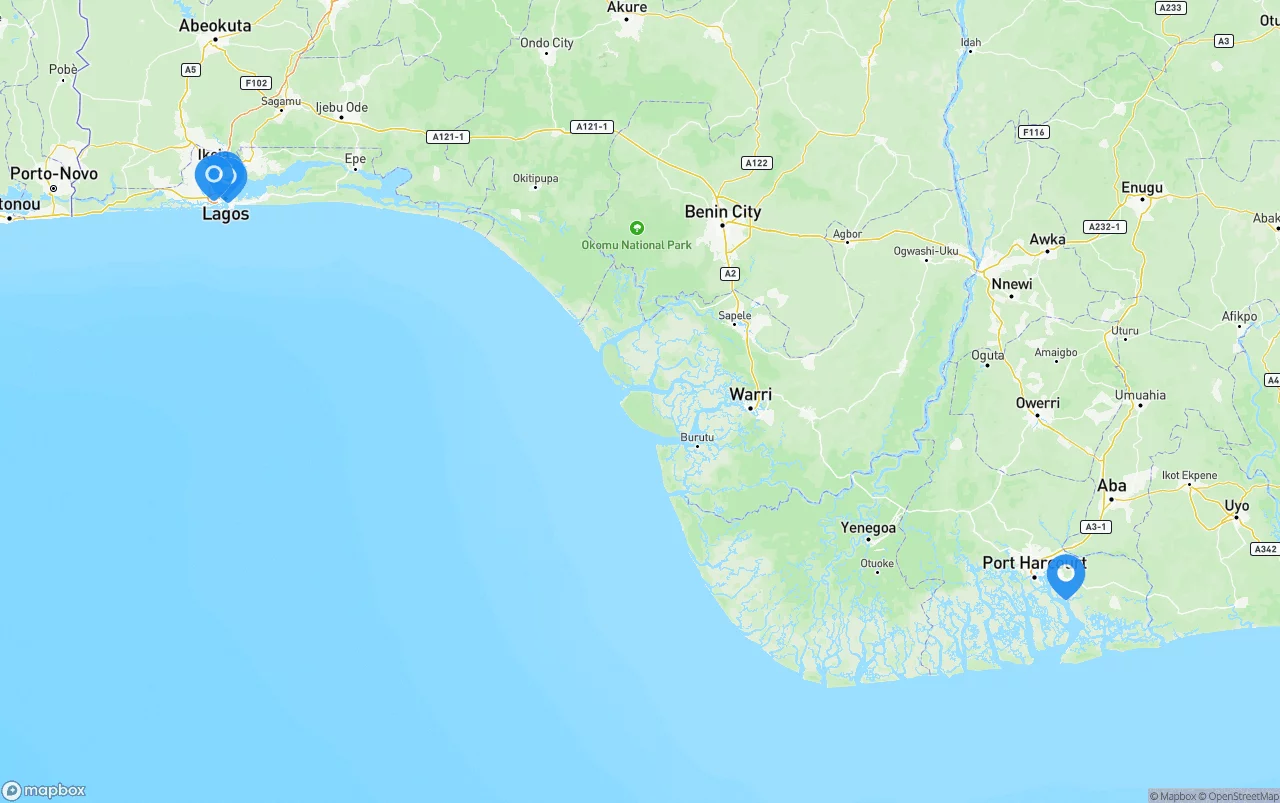 Apapa Port: Apapa Port is the largest and busiest port in Nigeria, located in Lagos. It is a major gateway for imports and exports in the country, handling a large volume of goods such as petroleum products, vehicles, and general cargo. The port is equipped with modern facilities and infrastructure to handle containerized cargo efficiently.
Lagos Port: Lagos Port is another important port in Nigeria, located on the outskirts of Lagos. It serves as a key hub for trade in the region, handling various types of cargo including containers, bulk cargo, and petroleum products. The port has undergone significant expansion and modernization in recent years to enhance its capacity and efficiency.
Onne Port: Onne Port is located in Rivers State, serving as a major oil and gas logistics base in Nigeria. It is one of the largest container terminals in the country, handling a significant volume of containerized cargo. The port is strategically located near oil and gas fields, making it a crucial hub for the industry.
Tincan Port: Tincan Port is situated in Lagos, adjacent to the Apapa Port. It is a key gateway for containerized cargo, handling a significant volume of imports and exports. The port has modern facilities and equipment to ensure efficient handling of cargo, contributing to the economic growth of Nigeria.
Antan Terminal Port: Antan Terminal Port is a private port terminal located in Lagos, specializing in containerized cargo. It is a key player in the maritime industry, offering efficient services for shippers and consignees. The port is equipped with state-of-the-art facilities to handle various types of containers and goods.
Other ports in Nigeria include Port Harcourt Port, Calabar Port, and Warri Port, which also play significant roles in the country's maritime trade.
Looking for a freight forwarder in Saudi Arabia and Nigeria? There is a list of the best freight forwarders, cargo agents, air, sea, land, river, railroad transport companies, logistics, brokers cargo services in Saudi Arabia and Nigeria. Elevate your business's supply chain effectiveness by selecting the ideal freight forwarding partner.
Maximize your logistics efficiency between Saudi Arabia and Nigeria by partnering with premier freight forwarders. These expert forwarders invest time to deeply understand your unique shipping requirements. Through a personalized and meticulous approach, they guarantee seamless shipment execution across borders, ensuring timely arrivals at every destination.
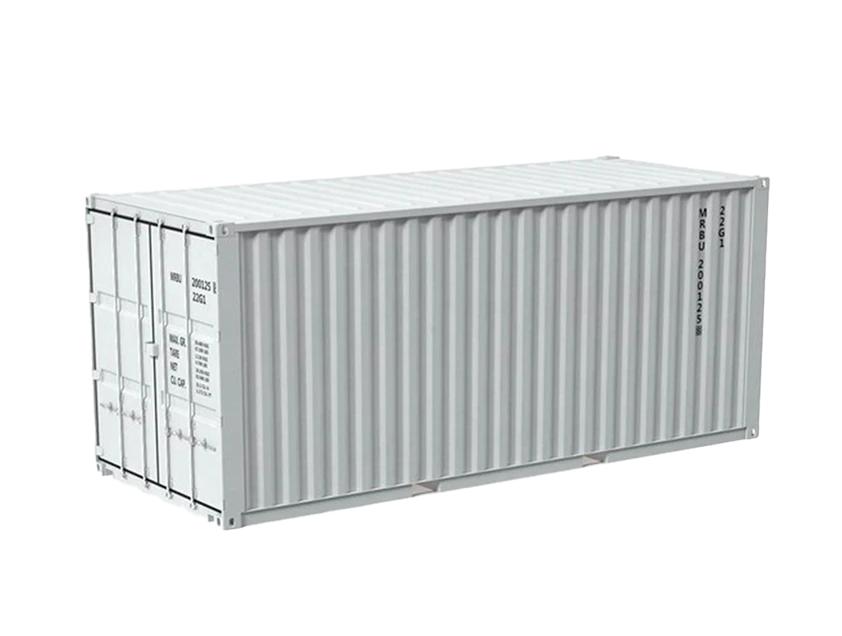
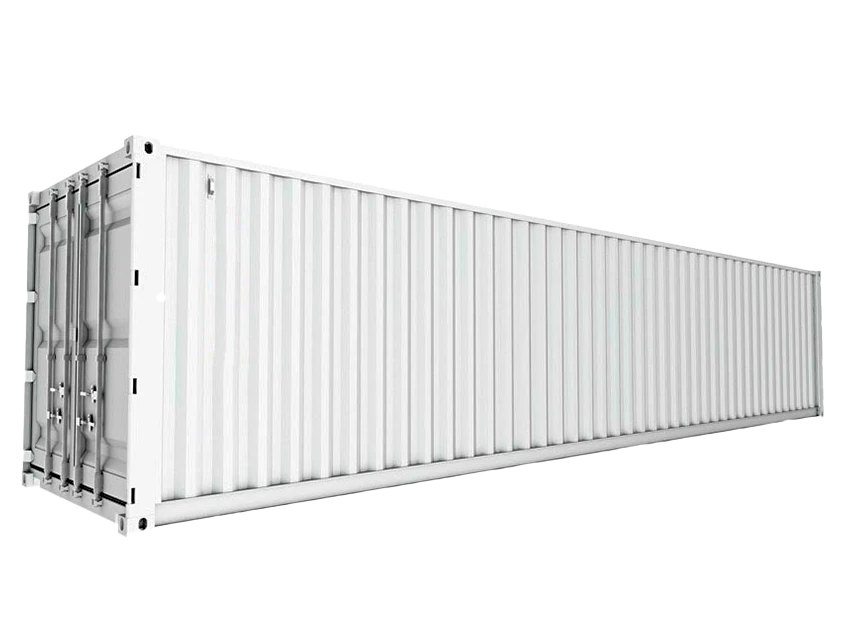
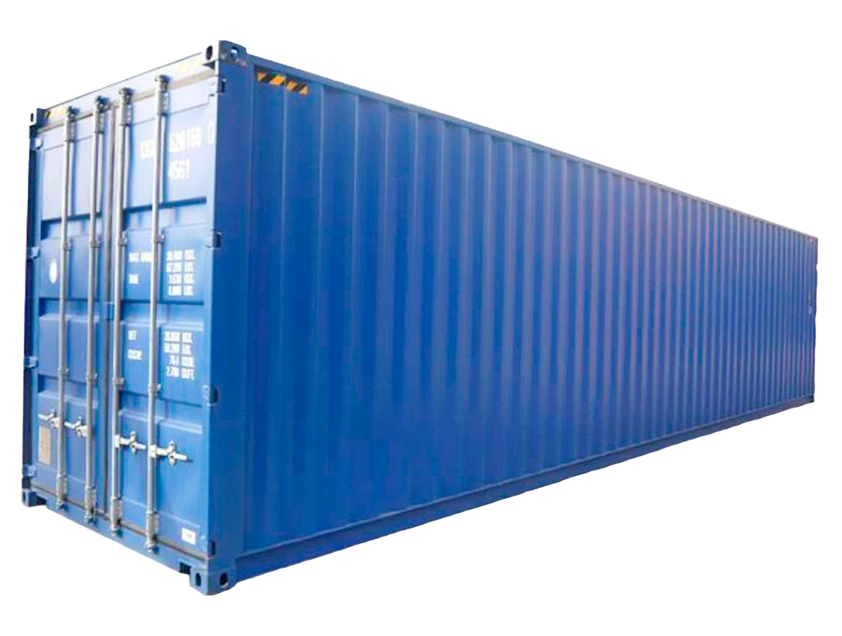
At FWFreight, we offer comprehensive international container shipping services tailored to meet your needs. We provide efficient and reliable shipping solutions from Saudi Arabia to Nigeria. Here's a breakdown of our shipping options:
LCL from Saudi Arabia to Nigeria (Less than Container Load):
For smaller shipments that don't fill an entire container, our LCL service is the perfect solution. We consolidate multiple shipments into one container, saving you time and money. With regular departures to Nigeria from Saudi Arabia. Your cargo will reach its destination securely and on schedule.
FCL from Saudi Arabia to Nigeria (Full Container Load):
If you have enough cargo to fill a whole container, our FCL service offers exclusive use of a container. This ensures your goods remain secure and minimizes the risk of damage during transit. Choose to 20 FT, 40 FT, or 40 HC containers, depending on the volume and nature of your cargo.
Air Freight from Saudi Arabia to Nigeria:
When time is of the essence, our air freight service provides swift delivery for urgent shipments. With extensive networks and partnerships, we guarantee efficient handling and timely delivery of your cargo to Nigeria to destinations across the globe.
Below is a table with Shipping Rates from Saudi Arabia to Nigeria for various types of containers. You can use these Quick Quotes from Saudi Arabia to Nigeria as a guideline. To get an Instant Rate from Saudi Arabia to Nigeria for the necessary date, you can send a request.
For container transportation from Saudi Arabia to Nigeria, various factors come into play. The size of the shipping container, the type of goods to be shipped, distance of the destination, and the shipping method (either Full Container Load or Less than Container Load) all directly affect the cost.
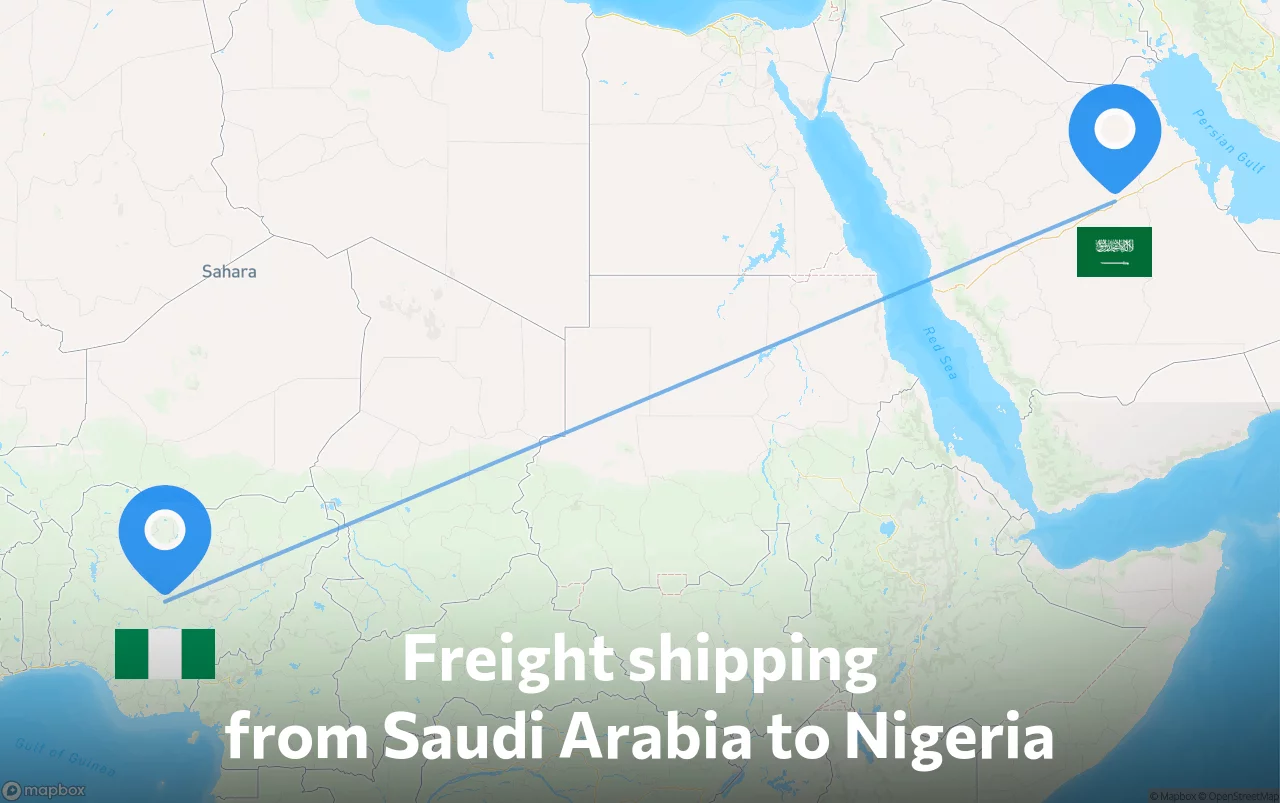 Shipping cargo from Saudi Arabia to Nigeria typically takes around 2-4 weeks by sea, depending on factors such as the specific ports of departure and arrival, the type of cargo being shipped, and the shipping route chosen. The distance between the two countries, as well as weather conditions and potential port congestion, can also impact the speed of shipping. Shippers can opt for direct routes or transshipment routes, with direct routes being faster but potentially more expensive due to higher shipping costs.
Customs clearance processes in both Saudi Arabia and Nigeria can contribute to potential delays in shipping cargo. In Saudi Arabia, customs clearance usually takes around 3-5 days on average, while in Nigeria it can take up to 7-10 days. Delays can occur due to documentation errors, inspections, or compliance issues. Shippers can mitigate these delays by ensuring all documentation is accurate and complete, working with experienced customs brokers, and partnering with logistics companies that have expertise in navigating customs processes. Companies like FW Freight specialize in transport services between Saudi Arabia and Nigeria, offering tailored solutions to ensure efficient and timely delivery of cargo. Working with experienced logistics partners can help shippers streamline the shipping process and minimize delays, ultimately saving time and costs.
 Welcome to FWFreight, your premier destination for all your shipping needs to Nigeria. With our core services firmly entrenched in the realities of international shipping to Nigeria from other countries, we have established a fully integrated delivery system that ensures your freight arrives in perfect condition and within the stipulated time frame. Whether it's sea, air, rail, or truck shipments you need, our well-trained team of logisticians is ready to offer you an affordable and convenient solution tailored to meet your individual needs. We specialize specifically in import to Nigeria, and our astute understanding of the local terrain gives us a competitive edge in Freight Shipping to Nigeria.
At a service level, FWFreight is committed to providing an unmatched customer experience. We believe that every customer deserves the best service in the world, and we work tirelessly to actualize this belief. Our comprehensive logistics services encompass every aspect of transportation, allowing us to cater to a diverse clientele ranging from local exporters to international importers. We offer a broad spectrum of forwarding services designed to ensure smooth and swift deliveries, regardless of your location or the nature of your freight. Leveraging advanced technology, our shipping company optimizes routes, reduces costs, and ensures you're always informed about the whereabouts of your shipment. With our expertise, we are not just a shipping company; we are your trusted partner in global logistics.