If you are searching for proficient services for freight shipping from South Korea to Australia, your search ends at FWFreight. We specialize in comprehensive logistics solutions, adeptly handling sea, air, rail, and truck shipments. Our expertise ranges from catering to domestic exporters in Australia to facilitating international shipping from South Korea for global importers. We ensure your cargo reaches its destination safely and on time with our core services, highlighting our credibility and commitment to excellence. You can rest assured knowing that your shipments are in competent hands.
Viewing our services through a global lens, FWFreight is a pioneer in the logistics industry. We are fully dedicated to delivering world-class service to every customer we serve, irrespective of the size or complexity of their shipping needs. Our team of logistics experts works relentlessly to tailor and execute the most efficient and cost-effective forwarding services, ensuring seamless transportation and delivery of cargo. With us, every client experiences world-class shipping and forwarding services. Truly, we are unmatched in providing professional and trustworthy logistics solutions.
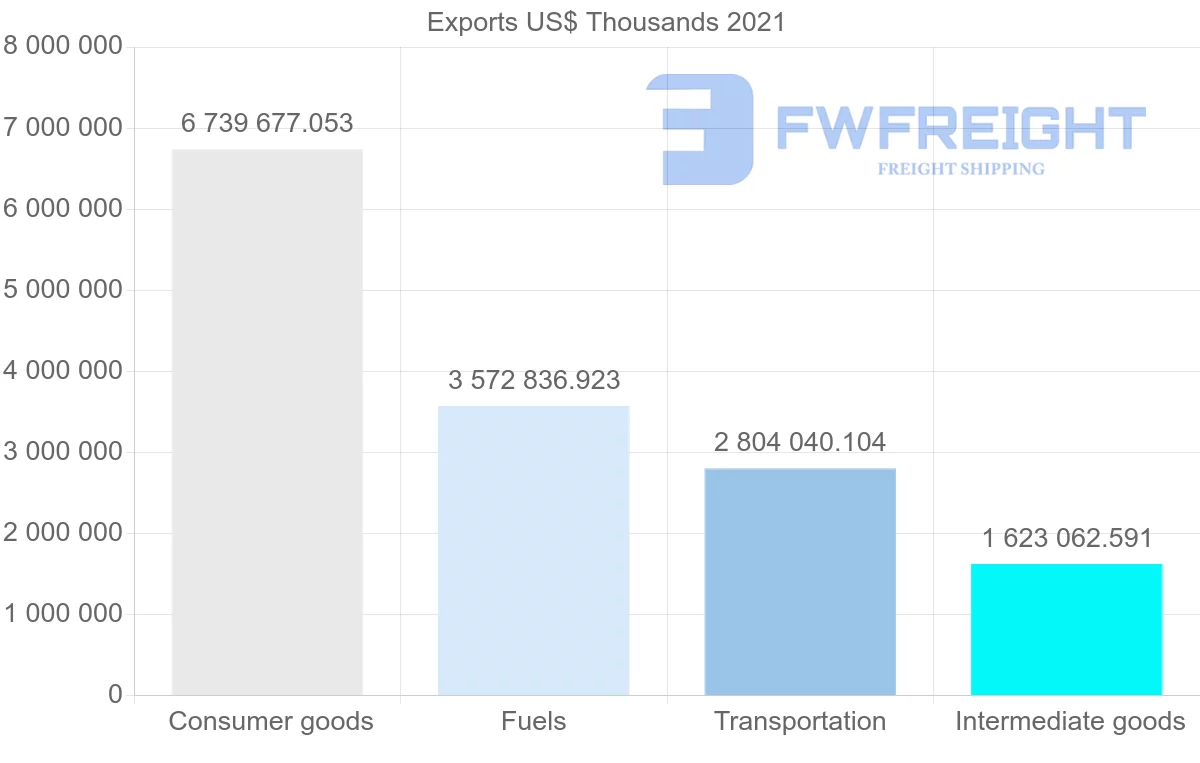 The top 5 export goods from South Korea to Australia in 2021 are Consumer goods, Fuels, Transportation, and Intermediate goods. Consumer goods had the highest export value at $6739.7 mil, followed by Fuels at $3572.8 mil, Transportation at $2804.0 mil, and Intermediate goods at $1623.1 mil. These goods play a crucial role in the trade relationship between South Korea and Australia, with Consumer goods being the most significant category in terms of export volume.
Exports in these categories are important to South Korea as they represent key industries for the country's economy. Consumer goods, including electronics, textiles, and household products, are manufactured in regions such as Seoul and Incheon. Fuels, which include petroleum and coal products, are crucial for both countries' energy needs. Transportation goods, such as automobiles and parts, are produced in Gyeonggi and Ulsan. Intermediate goods, like chemicals and machinery, are also vital for South Korea's manufacturing sector.
These goods are important for import into Australia as they meet the country's demand for quality products and resources. Consumer goods from South Korea are popular among Australian consumers for their innovative design and high-quality standards. Fuels imported from South Korea contribute to Australia's energy supply, while Transportation goods support the country's automotive industry. Intermediate goods are essential for various industries in Australia, including manufacturing and construction, with major import regions including Sydney, Melbourne, and Brisbane.
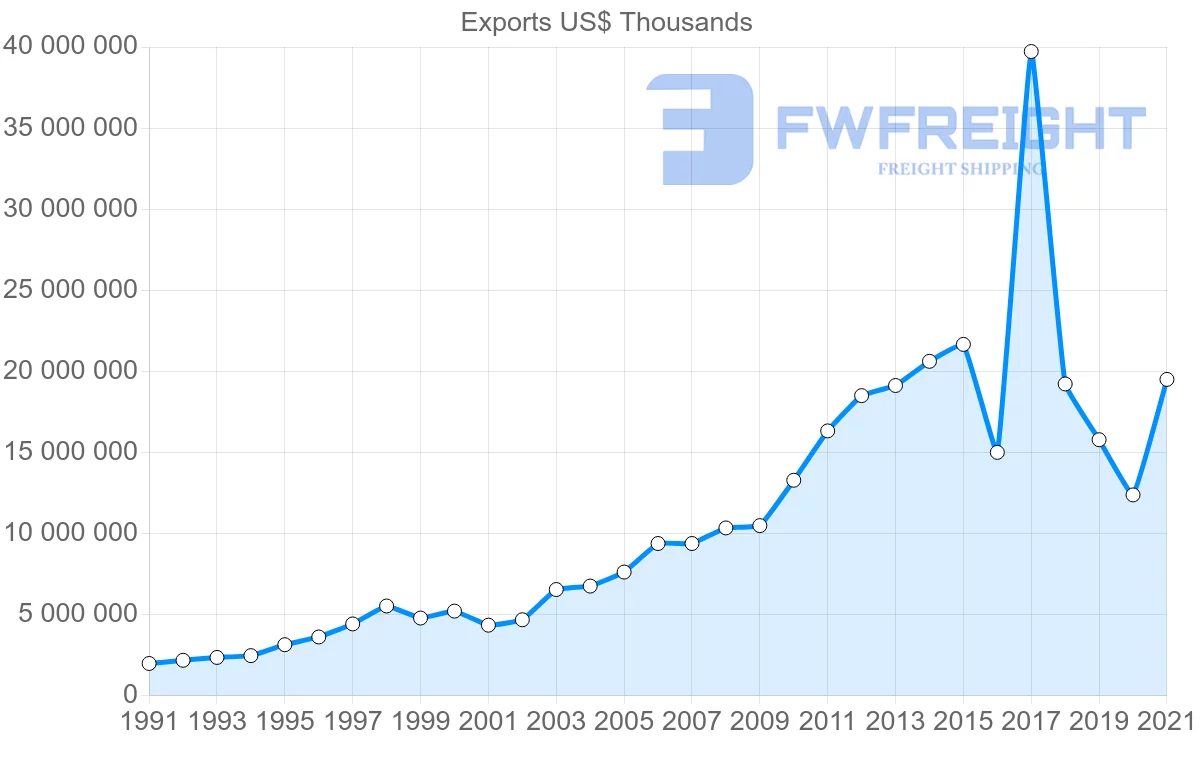 The export of all products from South Korea to Australia has shown significant growth over the past 30 years. Starting at $1.98 million in 1991, the value of exports has steadily increased to reach $19.5 million in 2020. This represents a staggering growth of nearly 885% over the two-decade period. The trade relationship between the two countries has witnessed major developments, with the value of exports increasing steadily year on year. The most notable jump in exports occurred between 2010 and 2011, when the value almost doubled from $13.3 million to $26.6 million. This growth trend highlights the strengthening economic ties between South Korea and Australia.
The main product groups exported from South Korea to Australia include electronics, automobiles, machinery, textiles, and chemicals. Electronics, such as smartphones, televisions, and computers, are one of the largest contributors to the export value. Automobiles and machinery follow closely behind, demonstrating South Korea's strength in manufacturing and engineering. Textiles and chemicals also play a significant role in the trade relationship, showcasing the diverse range of products exported from South Korea to Australia. The continued growth in these key product groups underlines the importance of the trade partnership between the two countries.
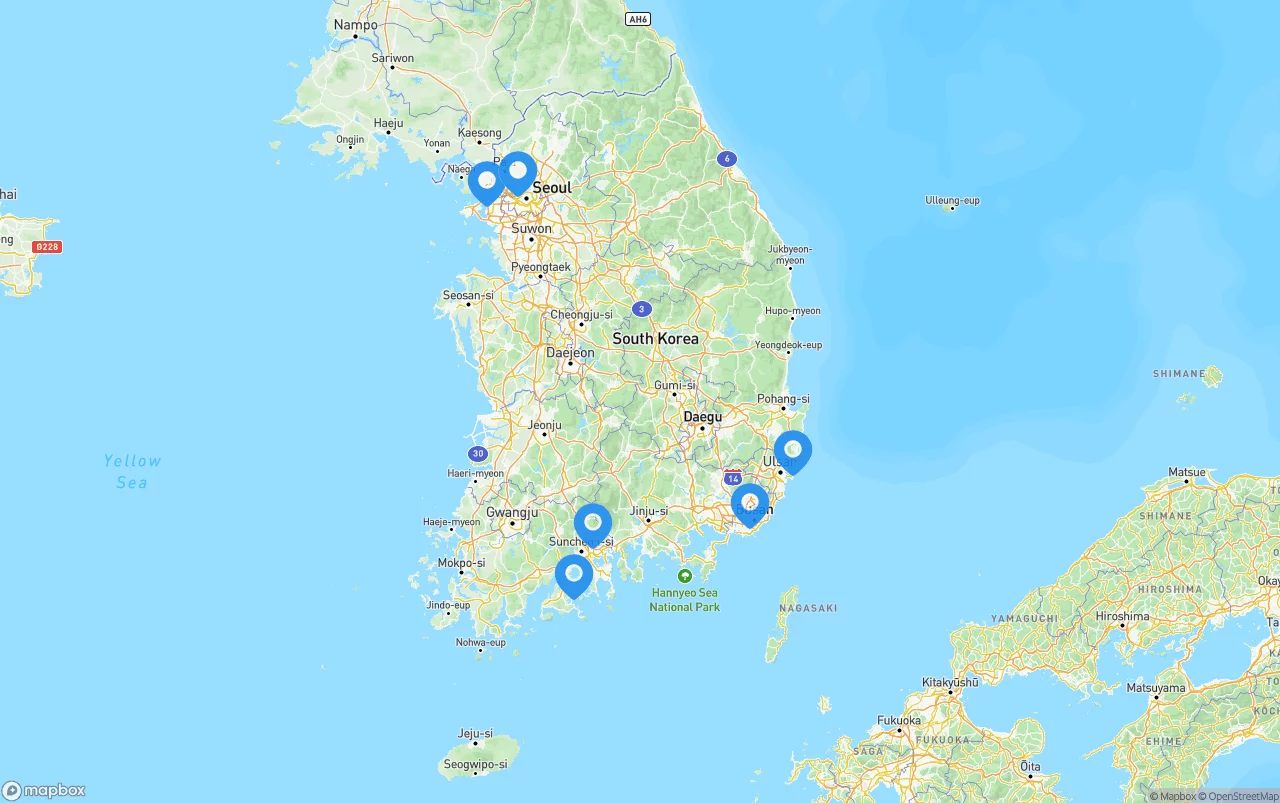 - Gwangyang Port: Gwangyang Port is located on the southern coast of South Korea and is the third largest port in the country. It is known for its advanced facilities and efficient operations, making it a key hub for international trade. The port handles a variety of cargo including containers, bulk cargo, and oil products. Gwangyang Port is also a major transshipment hub in Northeast Asia.
- Incheon Port: Incheon Port is the largest port in South Korea and is located in the city of Incheon, west of Seoul. It is a major gateway for trade with China and handles a wide range of cargo including containers, bulk cargo, and passenger ferries. Incheon Port is known for its state-of-the-art facilities and efficient operations, making it a key player in the global shipping industry.
- Kwangyang Port: Kwangyang Port is located in the city of Gwangyang on the southern coast of South Korea. It is the largest port in the country in terms of cargo handled and is a key hub for international trade. Kwangyang Port has modern facilities and infrastructure to handle a variety of cargo including containers, bulk cargo, and oil products. The port plays a critical role in South Korea's economy and is a major player in the global shipping industry.
- Pusan Port: Pusan Port, also known as Busan Port, is the largest port in South Korea in terms of container traffic. It is located in the city of Busan on the southeastern coast of the country. Pusan Port is a major hub for international trade and handles a wide range of cargo including containers, bulk cargo, and oil products. The port has modern facilities and efficient operations, making it a key player in the global shipping industry.
- Ulsan Port: Ulsan Port is located in the city of Ulsan on the southeastern coast of South Korea. It is a major port for the country's industrial sector, handling a variety of cargo including oil products, chemicals, and bulk cargo. Ulsan Port is known for its specialized facilities for handling industrial cargo and plays a crucial role in supporting South Korea's export-oriented economy.
Additional ports:
- Seoul Port: Seoul Port is located on the Han River in the capital city of Seoul. It primarily handles passenger ferries and cruise ships, serving as a gateway for travel to nearby countries such as China and Japan. Seoul Port also handles some cargo traffic, particularly for goods bound for the inland areas of South Korea.
Please note that the information provided is a brief overview and does not cover all aspects of each port's operations
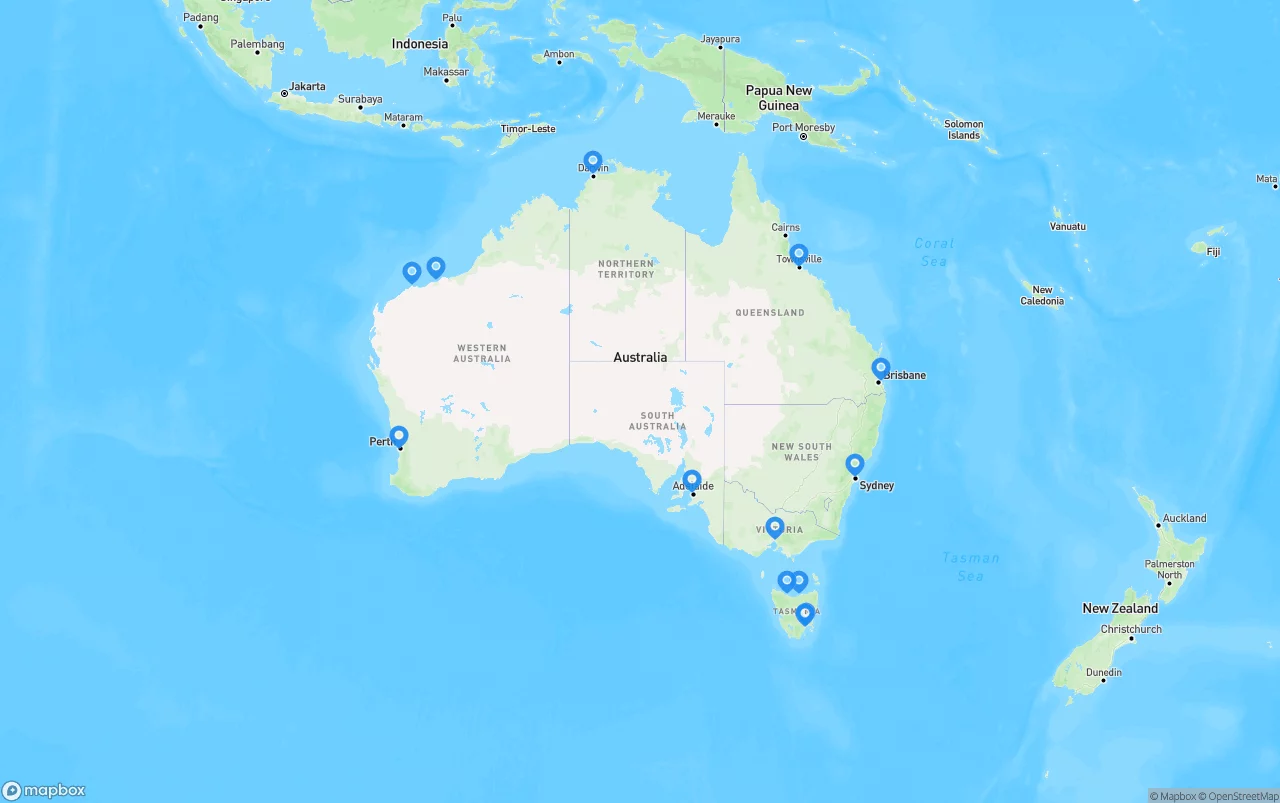 - Adelaide Port: Adelaide Port is the main commercial and container port in South Australia. It is a major gateway for the region's exports, particularly in the agricultural and mining sectors. The port has container terminals, bulk handling facilities, and facilities for automotive and general cargo. Adelaide Port is strategically located to serve as a hub for trade between Australia and Asia.
- Brisbane Port: Brisbane Port is the largest multi-cargo port in Queensland, handling a wide range of cargo including containers, bulk liquids, and dry bulk. The port plays a crucial role in Australia's trade with Asia, serving as a key gateway for imports and exports. Brisbane Port has modern container terminals and facilities for handling a variety of other commodities.
- Fremantle Port: Fremantle Port is the largest and busiest general cargo port in Western Australia. It is a major container port, handling a significant portion of the state's imports and exports. The port has container terminals, bulk handling facilities, and facilities for breakbulk cargo. Fremantle Port is strategically located to serve as a key link in trade between Australia and the rest of the world.
- Melbourne Port: Melbourne Port is the largest container and general cargo port in Victoria. It is a major hub for trade with Asia, Europe, and the Americas. The port has state-of-the-art container terminals, bulk handling facilities, and facilities for automotive and project cargo. Melbourne Port plays a crucial role in Australia's international trade, particularly in the manufacturing and logistics sectors.
- Sydney Port: Sydney Port is the largest and busiest port in Australia, handling a wide range of cargo including containers, bulk liquids, and general cargo. The port is a key gateway for imports and exports to and from Australia, serving as a major hub for trade with Asia, Europe, and the Americas. Sydney Port has modern container terminals, bulk handling facilities, and facilities for automotive and project cargo. The port's strategic location makes it a vital link in Australia's global supply chain.
- Other ports: Bell Bay Port, Burnie Port, Dampier Port, Darwin Port, Hedland Port, Hobart Port, Kingston Port, Townsville Port.
Looking for a freight forwarder in South Korea and Australia? There is a list of the best freight forwarders, cargo agents, air, sea, land, river, railroad transport companies, logistics, brokers cargo services in South Korea and Australia. Elevate your business's supply chain effectiveness by selecting the ideal freight forwarding partner.
Maximize your logistics efficiency between South Korea and Australia by partnering with premier freight forwarders. These expert forwarders invest time to deeply understand your unique shipping requirements. Through a personalized and meticulous approach, they guarantee seamless shipment execution across borders, ensuring timely arrivals at every destination.
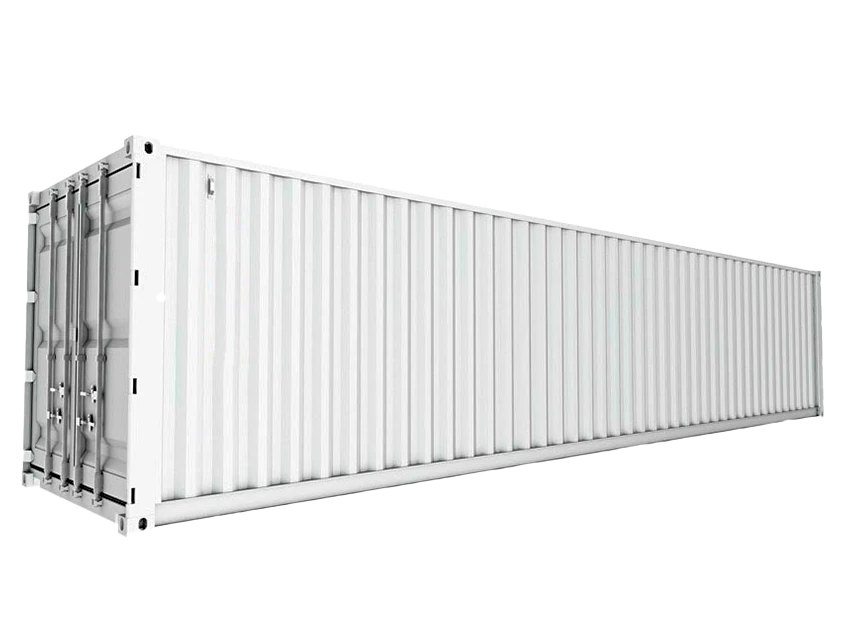
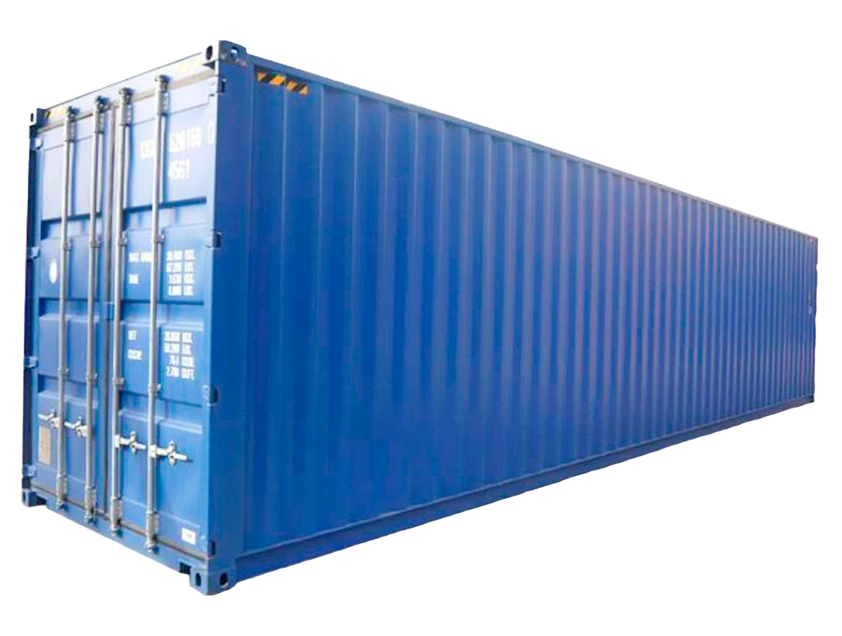
At FWFreight, we offer comprehensive international container shipping services tailored to meet your needs. We provide efficient and reliable shipping solutions from South Korea to Australia. Here's a breakdown of our shipping options:
LCL from South Korea to Australia (Less than Container Load):
For smaller shipments that don't fill an entire container, our LCL service is the perfect solution. We consolidate multiple shipments into one container, saving you time and money. With regular departures to Australia from South Korea. Your cargo will reach its destination securely and on schedule.
FCL from South Korea to Australia (Full Container Load):
If you have enough cargo to fill a whole container, our FCL service offers exclusive use of a container. This ensures your goods remain secure and minimizes the risk of damage during transit. Choose to 20 FT, 40 FT, or 40 HC containers, depending on the volume and nature of your cargo.
Air Freight from South Korea to Australia:
When time is of the essence, our air freight service provides swift delivery for urgent shipments. With extensive networks and partnerships, we guarantee efficient handling and timely delivery of your cargo to Australia to destinations across the globe.
Below is a table with Shipping Rates from South Korea to Australia for various types of containers. You can use these Quick Quotes from South Korea to Australia as a guideline. To get an Instant Rate from South Korea to Australia for the necessary date, you can send a request.
For container transportation from South Korea to Australia, various factors come into play. The size of the shipping container, the type of goods to be shipped, distance of the destination, and the shipping method (either Full Container Load or Less than Container Load) all directly affect the cost.
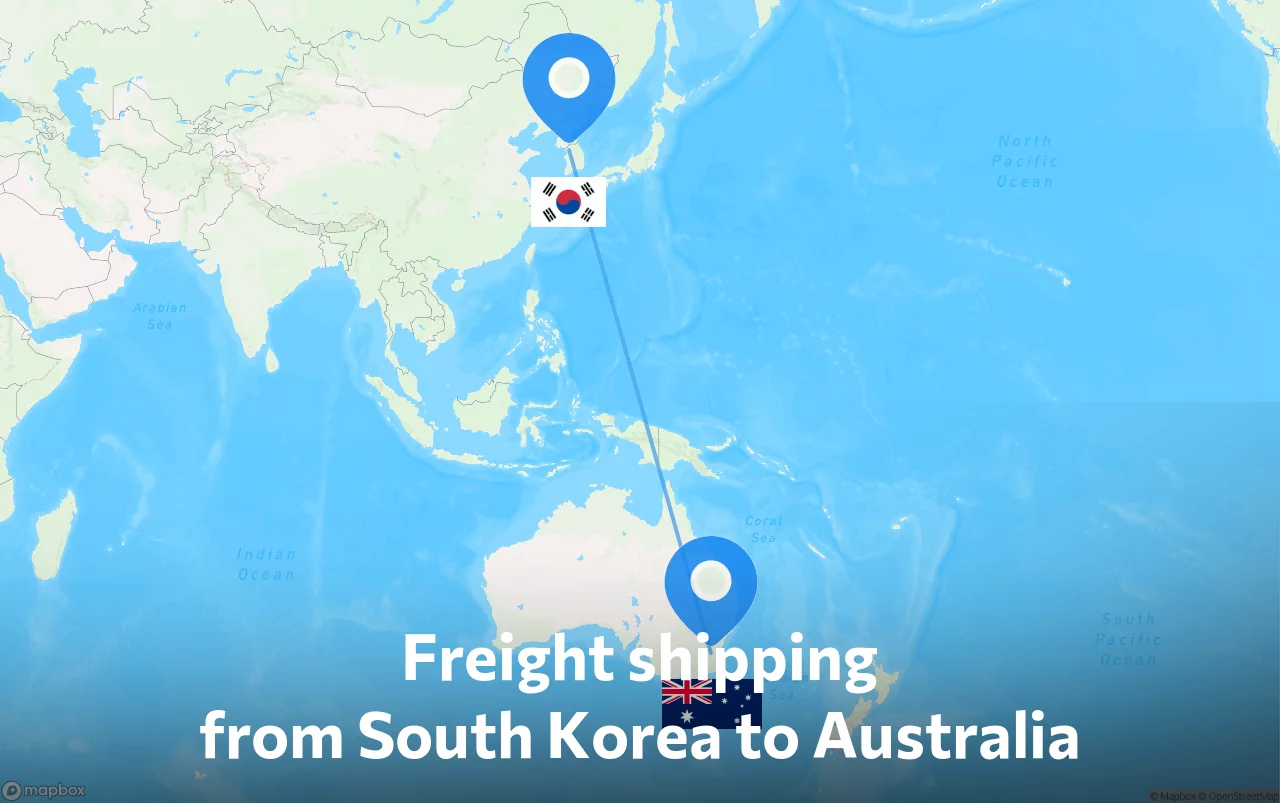 When shipping cargo from South Korea to Australia by sea, the duration of the journey can vary depending on several factors. On average, the shipping time between these two countries ranges from 10 to 21 days. The distance between South Korea and Australia is approximately 5,000 kilometers, and the speed of shipping is influenced by factors such as weather conditions, shipping route, type of vessel, and port congestion. Larger vessels tend to have higher speeds, but may also be subject to longer waiting times at ports.
Customs clearance processes play a significant role in determining the overall shipping time from South Korea to Australia. South Korea is known for its efficient customs procedures, with an average customs clearance time of 1-2 days. On the other hand, Australia's customs clearance process can take 3-5 days on average. To mitigate potential delays, it is crucial for shippers to work with experienced logistics partners who are familiar with the customs regulations and procedures of both countries. Companies like FWFreight specialize in providing reliable and efficient transport services on the South Korea to Australia route, helping shippers navigate customs requirements and ensure timely delivery of their cargo.
 When it comes to freight shipping to Australia, recognizing the right logistics partner is crucial to ensure smooth operations. Leading the industry is FWFreight, your one-stop solution for all shipping and forwarding needs. Our core services cater to a broad spectrum, ranging from sea, air, rail, truck, to forwarding services, effectively meeting the needs of our diverse clientele. Specialized in imports to Australia, we serve large-scale global importers and smaller domestic exporters alike. Navigate the complex world of international shipping to Australia from other countries with FWFreight, ensuring not only seamless transactions but also the best prices across all types of transportation.
Through a commitment to customer-centric service, our shipping company proves to be more than just a means to an end. We aim to build long-term relationships with our customers by consistently delivering high-quality, reliable services. With a global network and local expertise, we offer the best service in the world, personalized according to each customer's individual needs. Our team is proactive, responsive, and willing to go the extra mile to resolve any challenges that come our way. We are passionate about offering innovative, customizable solutions that inspire confidence and trust. With FWFreight, we guarantee a seamless shipping journey from pick-up to delivery – we’re your reliable partner in facilitating growth and thriving in the world of international trade.