If you're seeking a company to handle your freight shipping from South Korea to Libya, look no further. FWFreight is at the forefront of delivering impeccable service in national and international shipping from South Korea. Our core services encompass all your shipment needs, offering a comprehensive range of logistics solutions. Whether by sea, air, rail, or truck, we ensure your freight reaches its destination securely and promptly. Domestic exporters and global importers alike can rest assured in the reliability of our services and our commitment to client satisfaction.
FWFreight prides itself on providing the best service in the world for every customer. Our extensive industry knowledge combined with a global network ensures we can meet your forwarding service needs, whatever they may be. From bespoke logistics solutions to managing complex supply chains, our company is dedicated to facilitating your business growth by ensuring efficient and streamlined shipping processes. Our aim is to keep your business moving forward, negotiating any logistical hurdles on your behalf, so that you can focus on what really matters - expanding and developing your business.
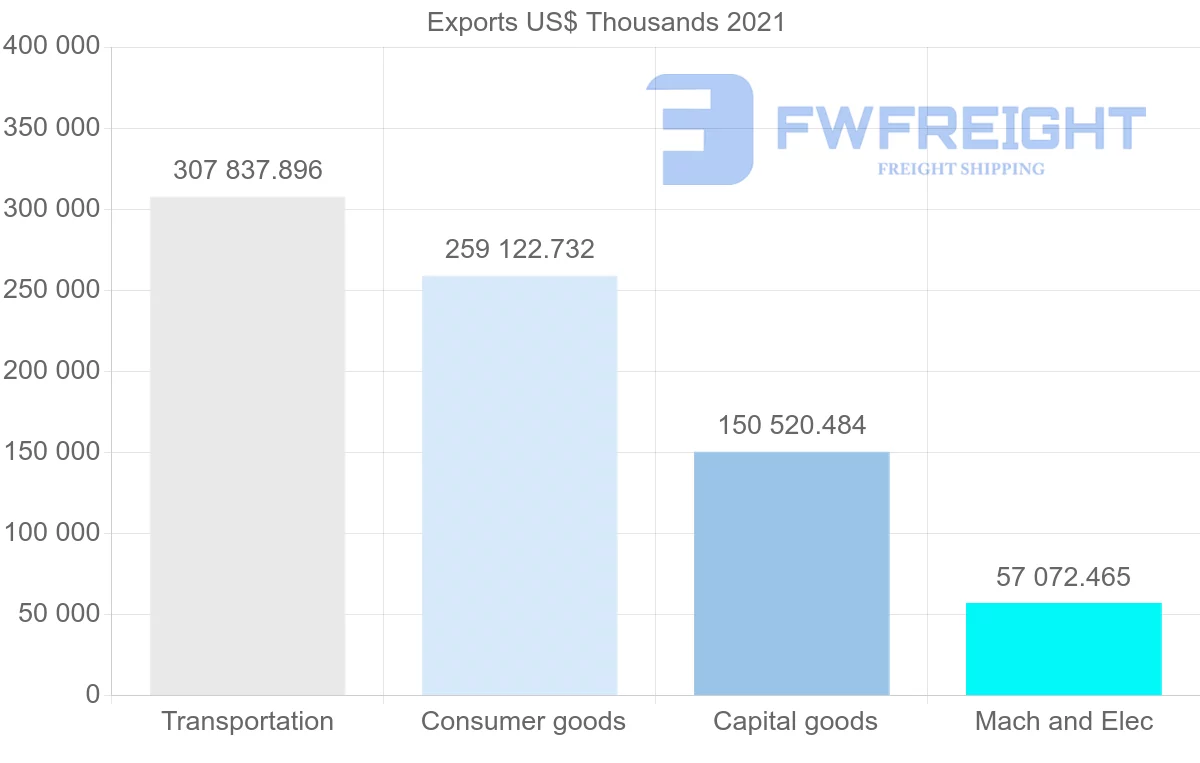 The top 5 export goods from South Korea to Libya in 2021 were transportation equipment totaling $307.84 million, consumer goods totaling $259.12 million, capital goods totaling $150.52 million, and machinery and electronics totaling $57.07 million. The transportation equipment category includes automobiles, airplanes, and ships. Consumer goods include items like electronics, clothing, and cosmetics. Capital goods consist of industrial machinery and equipment. Machinery and electronics cover a wide range of products, such as semiconductors and machinery parts.
Exports in these categories are crucial for South Korea as they represent a significant portion of the country's total export volume. South Korea is known for its strong manufacturing industry, particularly in the production of automobiles, electronics, and machinery. Regions such as Seoul, Incheon, and Gyeonggi are major hubs for the production of these goods. These regions are home to many of South Korea's leading companies, such as Samsung, Hyundai, and LG, which are key exporters of transportation equipment, consumer goods, and machinery.
These goods are important for import into Libya as they are essential for the country's economic development and infrastructure growth. Libya relies heavily on imported machinery and equipment for its construction and industrial projects. The transportation equipment and consumer goods imported from South Korea help to meet the demand for reliable vehicles and household products in Libya. These goods are mainly supplied to regions such as Tripoli, Benghazi, and Misrata, where the bulk of Libya's population and economic activity are concentrated.
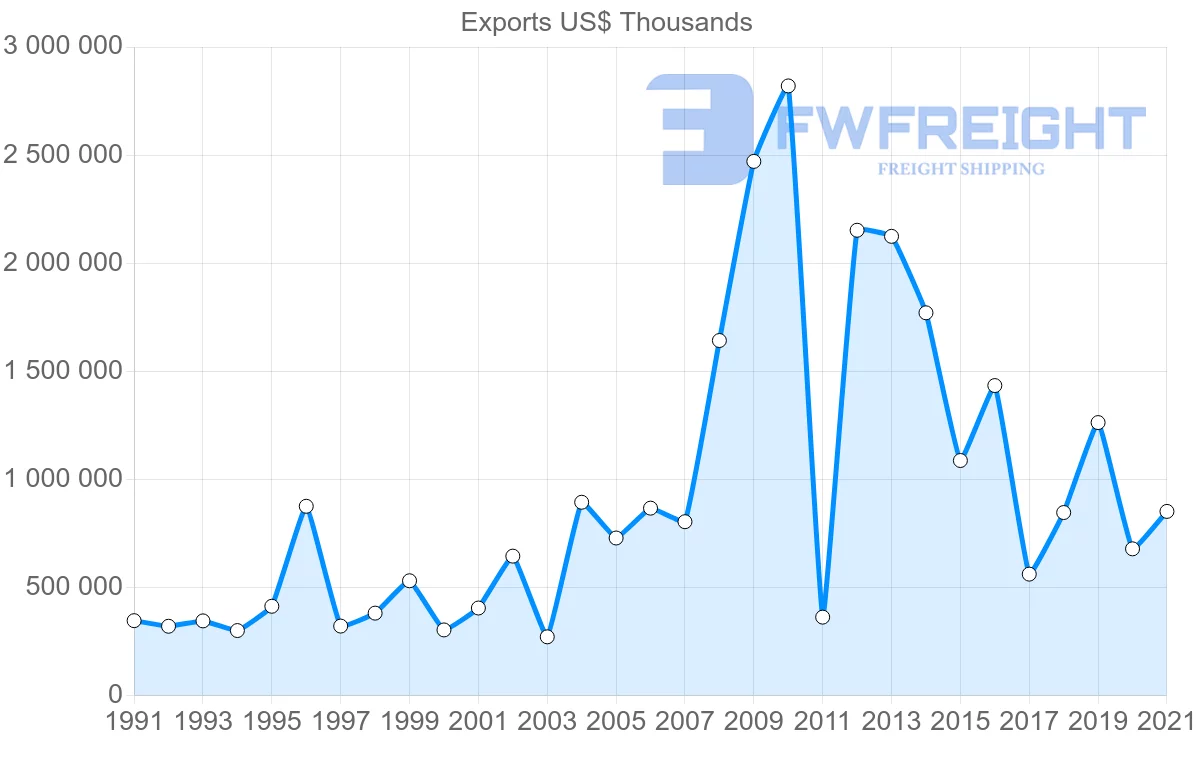 Over the past 30 years, the export value of all products from South Korea to Libya has shown significant fluctuations. The trade relationship between the two countries started off relatively modest in the early 1990s, with export values hovering around $300-400 million. However, there was a major spike in 1996, where the export value increased to $875 million. This trend continued to rise steadily, reaching its peak in 2014 at $2.47 billion. Despite some fluctuations in the following years, the trade volume remained relatively stable, with the latest figures in 2021 showing an export value of $851 million. Overall, there was a notable growth of over 230% in trade between South Korea and Libya over the past 30 years.
The main product groups exported from South Korea to Libya include electronics, machinery, vehicles, iron and steel products, and chemicals. Electronics, such as smartphones, TVs, and computer parts, have been a consistently dominant export product to Libya. Machinery and vehicles have also been key exports, as South Korea is known for its advanced technology in these sectors. Iron and steel products, as well as chemicals, have also contributed significantly to the export volume. These products cater to Libya's growing infrastructure and industrial development needs, showcasing the diverse range of goods that South Korea offers to the Libyan market.
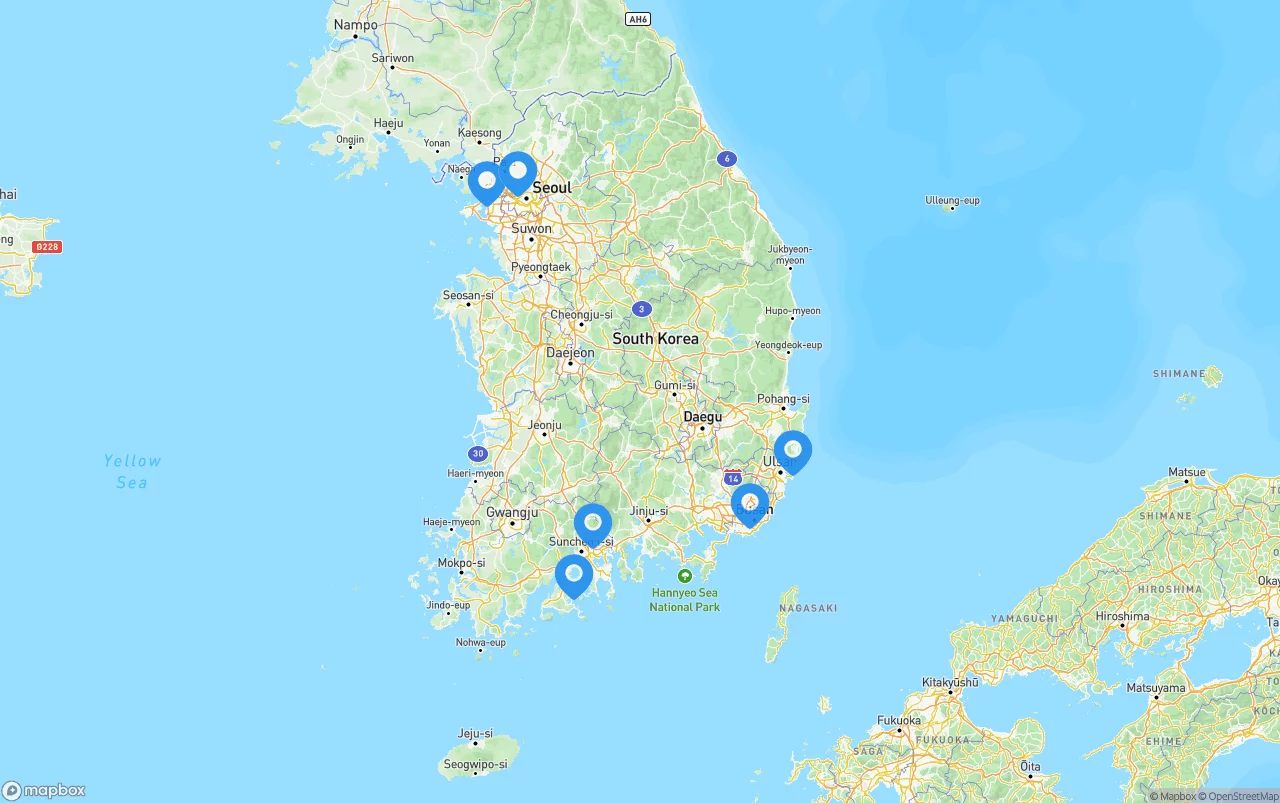 - Gwangyang Port: Gwangyang Port is located on the southern coast of South Korea and is the third largest port in the country. It is known for its advanced facilities and efficient operations, making it a key hub for international trade. The port handles a variety of cargo including containers, bulk cargo, and oil products. Gwangyang Port is also a major transshipment hub in Northeast Asia.
- Incheon Port: Incheon Port is the largest port in South Korea and is located in the city of Incheon, west of Seoul. It is a major gateway for trade with China and handles a wide range of cargo including containers, bulk cargo, and passenger ferries. Incheon Port is known for its state-of-the-art facilities and efficient operations, making it a key player in the global shipping industry.
- Kwangyang Port: Kwangyang Port is located in the city of Gwangyang on the southern coast of South Korea. It is the largest port in the country in terms of cargo handled and is a key hub for international trade. Kwangyang Port has modern facilities and infrastructure to handle a variety of cargo including containers, bulk cargo, and oil products. The port plays a critical role in South Korea's economy and is a major player in the global shipping industry.
- Pusan Port: Pusan Port, also known as Busan Port, is the largest port in South Korea in terms of container traffic. It is located in the city of Busan on the southeastern coast of the country. Pusan Port is a major hub for international trade and handles a wide range of cargo including containers, bulk cargo, and oil products. The port has modern facilities and efficient operations, making it a key player in the global shipping industry.
- Ulsan Port: Ulsan Port is located in the city of Ulsan on the southeastern coast of South Korea. It is a major port for the country's industrial sector, handling a variety of cargo including oil products, chemicals, and bulk cargo. Ulsan Port is known for its specialized facilities for handling industrial cargo and plays a crucial role in supporting South Korea's export-oriented economy.
Additional ports:
- Seoul Port: Seoul Port is located on the Han River in the capital city of Seoul. It primarily handles passenger ferries and cruise ships, serving as a gateway for travel to nearby countries such as China and Japan. Seoul Port also handles some cargo traffic, particularly for goods bound for the inland areas of South Korea.
Please note that the information provided is a brief overview and does not cover all aspects of each port's operations
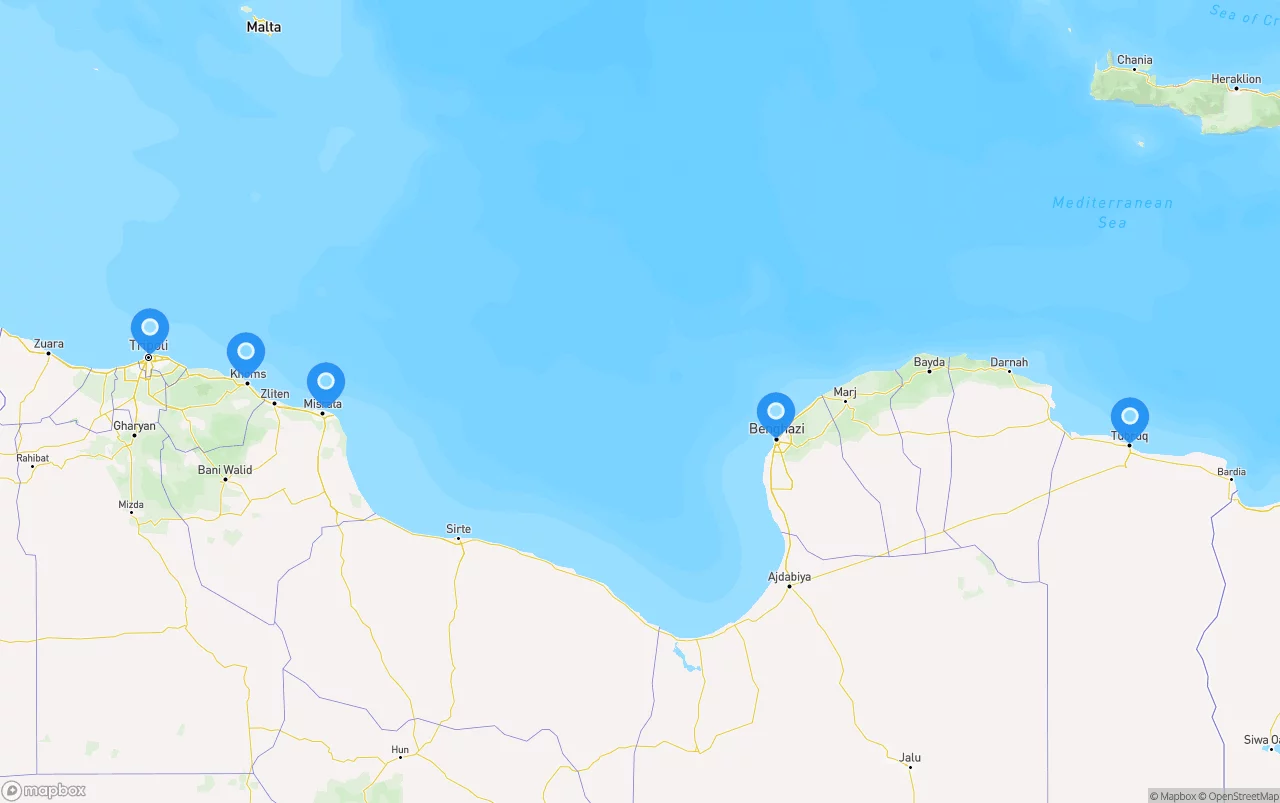 Benghazi Port: Benghazi Port is the second largest commercial port in Libya, located in the eastern part of the country. It plays a crucial role in facilitating the import and export of goods, serving as a major gateway for trade in the region.
Khoms Port: Khoms Port is a key commercial port situated in the northwestern part of Libya. It serves as a vital hub for the transportation of goods, particularly for the oil and gas industry. The port has experienced growth in recent years, contributing significantly to the country's economy.
Misurata Port: Misurata Port is one of the largest and busiest ports in Libya, located on the country's northern coast. It is a major container port, handling a diverse range of cargo including oil, gas, and general goods. The port plays a critical role in facilitating international trade and contributes significantly to Libya's economy.
Tobruk Port: Tobruk Port is a strategic commercial port situated in the northeastern part of Libya. It serves as an important gateway for the import and export of goods, particularly in the eastern region of the country. The port plays a key role in supporting economic activities and trade in the area.
Tripoli Port: Tripoli Port is the largest and busiest port in Libya, situated in the capital city of Tripoli. It is a major commercial and container port, handling a significant volume of cargo including oil, gas, and general goods. The port serves as a vital link for international trade and plays a crucial role in supporting the country's economy.
Other ports in Libya: Ras Lanuf Port, Zuwara Port.
Looking for a freight forwarder in South Korea and Libya? There is a list of the best freight forwarders, cargo agents, air, sea, land, river, railroad transport companies, logistics, brokers cargo services in South Korea and Libya. Elevate your business's supply chain effectiveness by selecting the ideal freight forwarding partner.
Maximize your logistics efficiency between South Korea and Libya by partnering with premier freight forwarders. These expert forwarders invest time to deeply understand your unique shipping requirements. Through a personalized and meticulous approach, they guarantee seamless shipment execution across borders, ensuring timely arrivals at every destination.
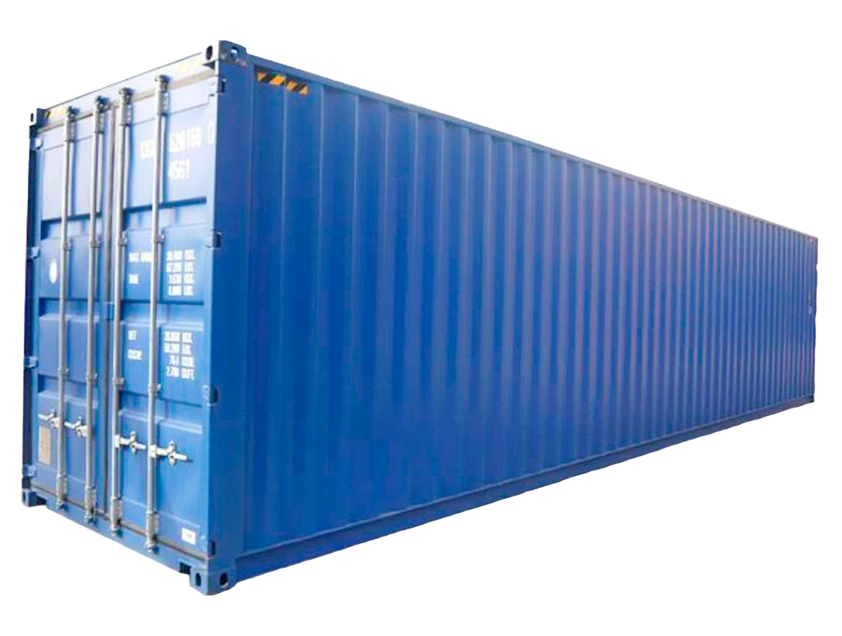
At FWFreight, we offer comprehensive international container shipping services tailored to meet your needs. We provide efficient and reliable shipping solutions from South Korea to Libya. Here's a breakdown of our shipping options:
LCL from South Korea to Libya (Less than Container Load):
For smaller shipments that don't fill an entire container, our LCL service is the perfect solution. We consolidate multiple shipments into one container, saving you time and money. With regular departures to Libya from South Korea. Your cargo will reach its destination securely and on schedule.
FCL from South Korea to Libya (Full Container Load):
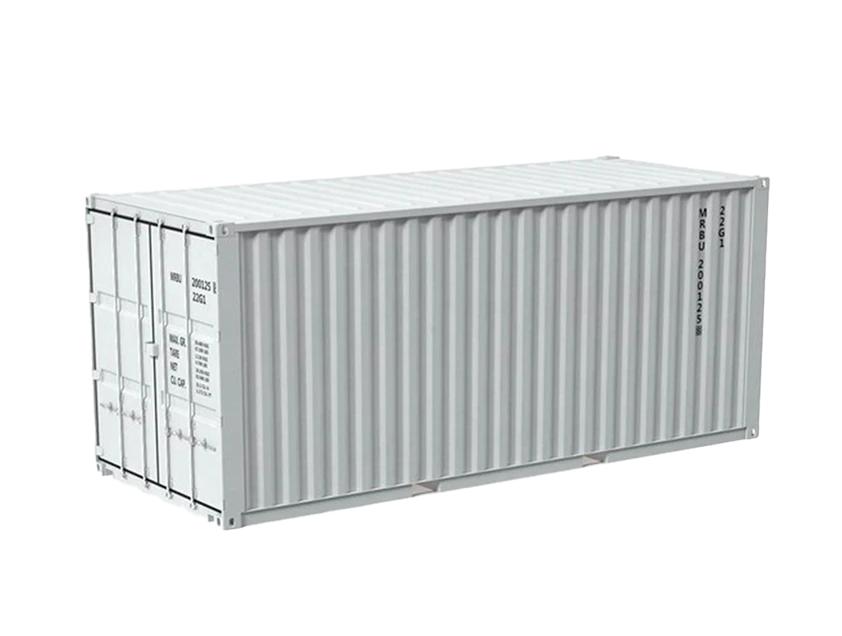
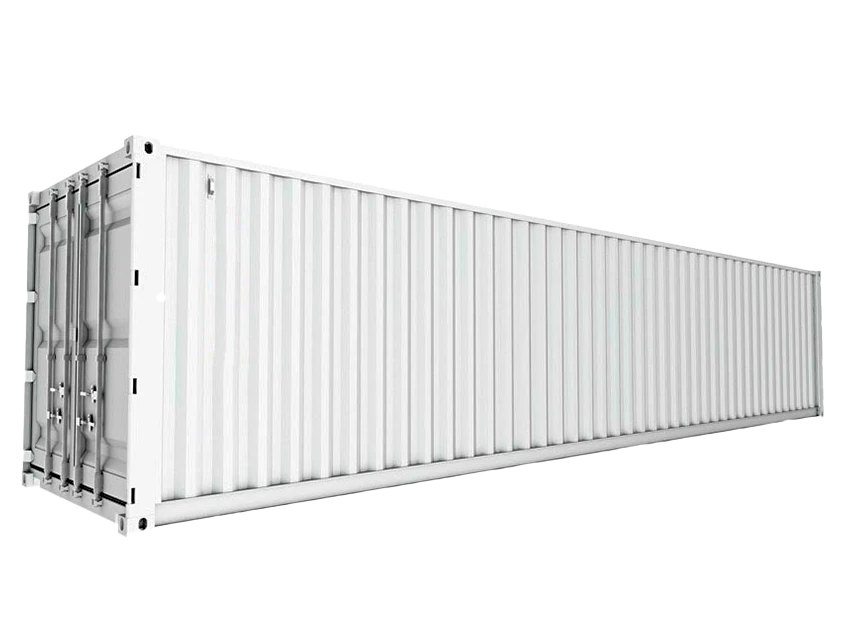
If you have enough cargo to fill a whole container, our FCL service offers exclusive use of a container. This ensures your goods remain secure and minimizes the risk of damage during transit. Choose to 20 FT, 40 FT, or 40 HC containers, depending on the volume and nature of your cargo.
Air Freight from South Korea to Libya:
When time is of the essence, our air freight service provides swift delivery for urgent shipments. With extensive networks and partnerships, we guarantee efficient handling and timely delivery of your cargo to Libya to destinations across the globe.
Below is a table with Shipping Rates from South Korea to Libya for various types of containers. You can use these Quick Quotes from South Korea to Libya as a guideline. To get an Instant Rate from South Korea to Libya for the necessary date, you can send a request.
For container transportation from South Korea to Libya, various factors come into play. The size of the shipping container, the type of goods to be shipped, distance of the destination, and the shipping method (either Full Container Load or Less than Container Load) all directly affect the cost.
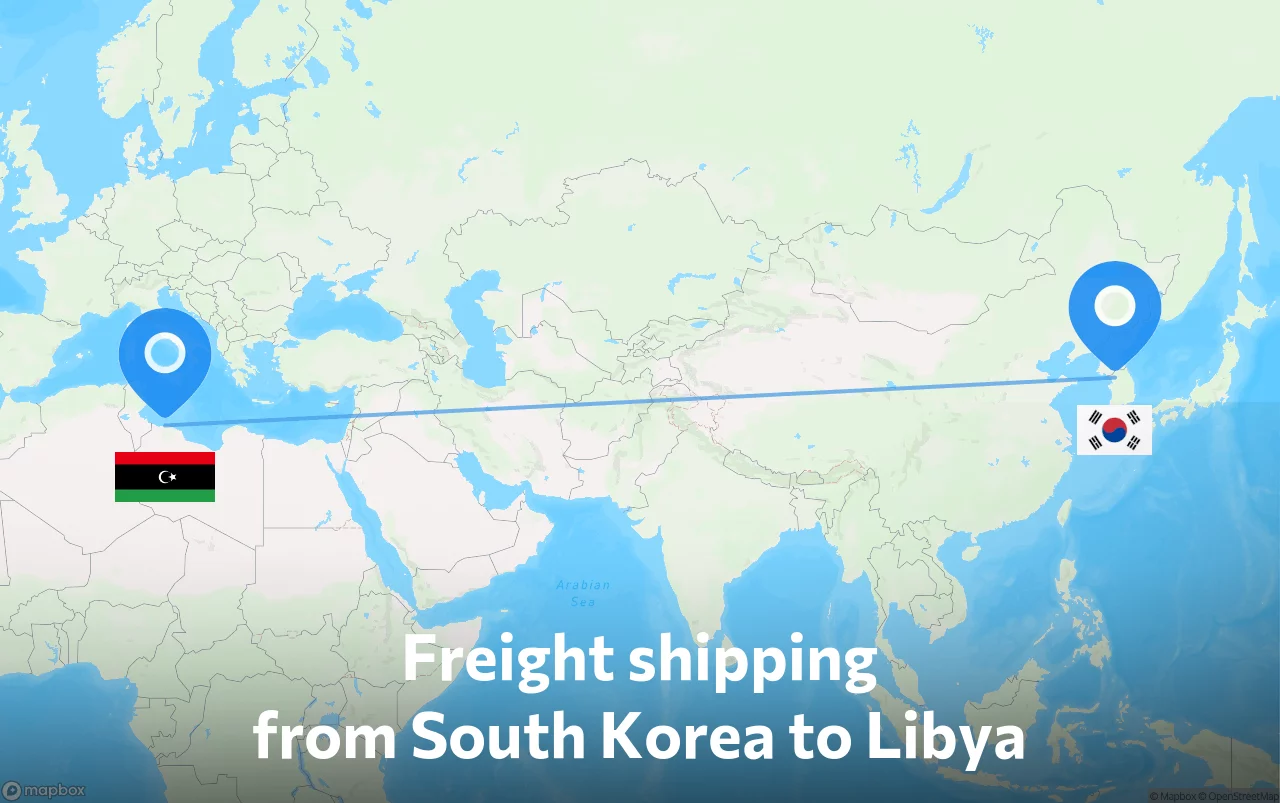 Shipping cargo from South Korea to Libya typically takes between 25 to 40 days by sea, depending on the specific route and carrier chosen. The distance between the two countries, as well as factors such as weather conditions, port congestion, and transit time for vessels all play a role in determining the speed of shipping. Additionally, the type of cargo being transported, the carrier's schedule, and any potential transshipment points can also impact the overall shipping time. Shippers can opt for direct shipping services or choose routes that include multiple transshipment points, depending on their specific needs and priorities.
Customs clearance plays a crucial role in determining the overall shipping time from South Korea to Libya. Both countries have specific customs regulations and procedures that need to be followed, which can lead to potential delays in the clearance process. On average, customs clearance in South Korea takes around 3-5 days, while in Libya it can take up to 7-10 days. Shippers can mitigate these delays by ensuring that all necessary documentation is in order, working with experienced customs brokers, and partnering with logistics providers who have a strong understanding of the customs processes in both countries. Companies like FWFreight specialize in transport services between South Korea and Libya, offering expertise and support to ensure smooth and efficient shipping processes.
 At FWFreight, we understand the intricacies involved in 'Freight Shipping to Libya'. That is why we've specialized in ensuring a smooth, reliable, and cost-effective delivery process for your goods to Libya. Our core services encompass sea, air, rail, truck, and forwarding services, providing multi-modal transportation options to cater to your specific needs. Whether you are a domestic exporter or an importer on a global scale, we guarantee the safe passage of your shipment through customs and onward to its final destination. Rest assured, with FWFreight, you have chosen the right partner for 'international shipping to Libya from other countries'.
In addition to providing services tailored to Libya, our company stands as a beacon of superior service in the global shipping industry. We are committed to offering the best service in the world to every customer, irrespective of shipment size or destination. Our experienced team ensures seamless transportation, keeping you informed at every step of the journey. We pride ourselves on providing competitive pricing without compromising service quality. With our vast network of partners and in-depth knowledge of global logistics, our shipping company offers a comprehensive range of logistic services to meet your specific needs. From export packing and cargo insurance to customs clearance and door-to-door delivery, we've got you covered.