At FWFreight, we specialize in freight shipping to Madagascar, offering a comprehensive range of logistics services catered to your needs. Whether it's by sea, air, rail, or truck, we have the competency and experience to manage the shipping and forwarding of goods both large and small. Our understanding of import regulations in Madagascar combined with our global network makes us the go-to solution for domestic exporters and global importers. We strive to offer our clients unmatched service, cost-effective shipping solutions, and most importantly, the assurance that they have chosen the right partner for their international shipping to Madagascar from other countries.
From a service perspective, FWFreight stands out in the ever-competitive world of logistics. What sets us apart is not just our ability to offer the best service on a global scale but also our commitment to each individual customer. We cater to a diverse clientele and make it our mission to understand their unique needs and preferences. Whether you need to ship a small personal item or manage the logistics of large-scale industrial import to Madagascar, our team is there to work with you every step of the way. We believe in delivering not just your goods, but peace of mind, knowing that your shipping needs are in safe, capable hands.
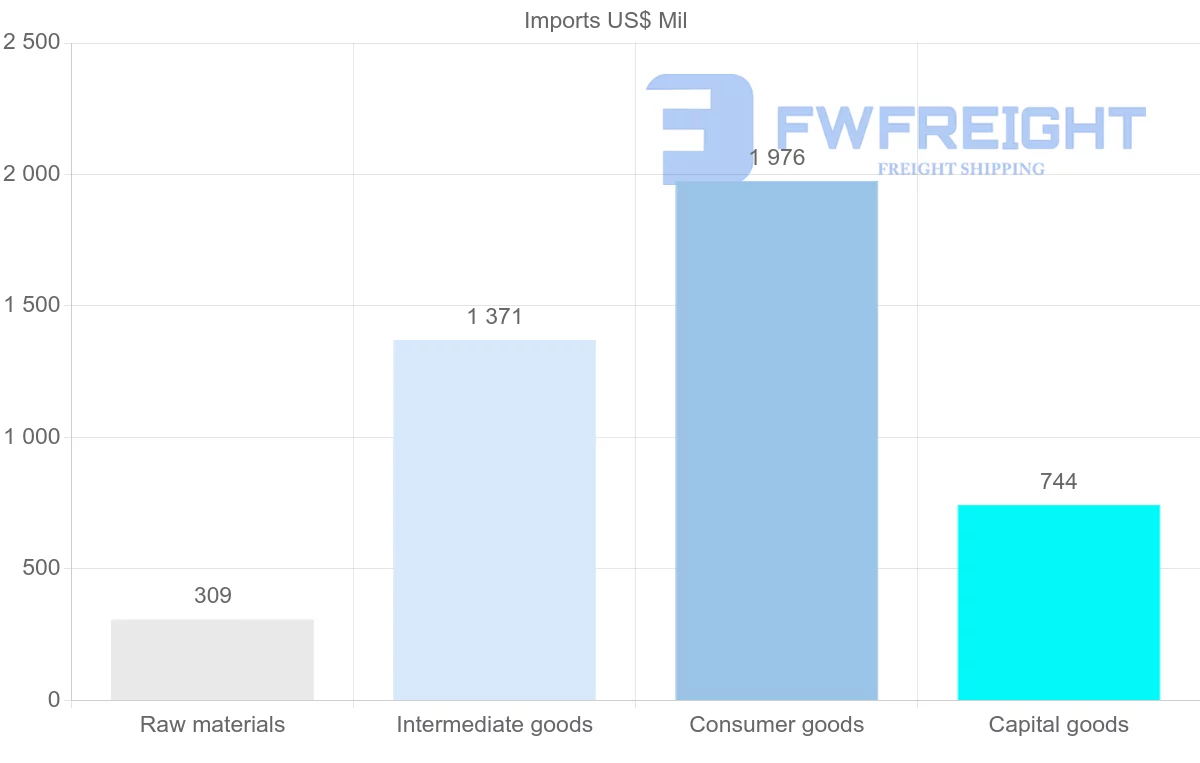 The graph displays the distribution of imports across different product categories in Madagascar, presenting both the import value in millions of US dollars and the product share percentage of the total import volume. The highest import category is consumer goods, with an import value of $1976 million, accounting for 44.83% of the total import volume. This category comprises goods that are used by the average consumer in their daily life, such as food, clothing, cars, and household products.
The second highest is intermediate goods, having an import value of $1371 million and making up 31.1% of the total import volume. These are goods used in the production of final goods, including parts or raw materials. Capital goods secure the third spot with an import value of $744 million, corresponding to 16.88% of the total import volume. Capital goods are used in producing other goods, but are not finished goods themselves - these include machinery, equipment, and buildings. The category with the lowest import value is raw materials, valued at $309 million, and amounting to 7% of the total import volume. Raw materials are the basic components used in the manufacturing process to create finished goods. Overall, the graph provides valuable insight into the economic structure of Madagascar and its reliance on various types of goods for import.
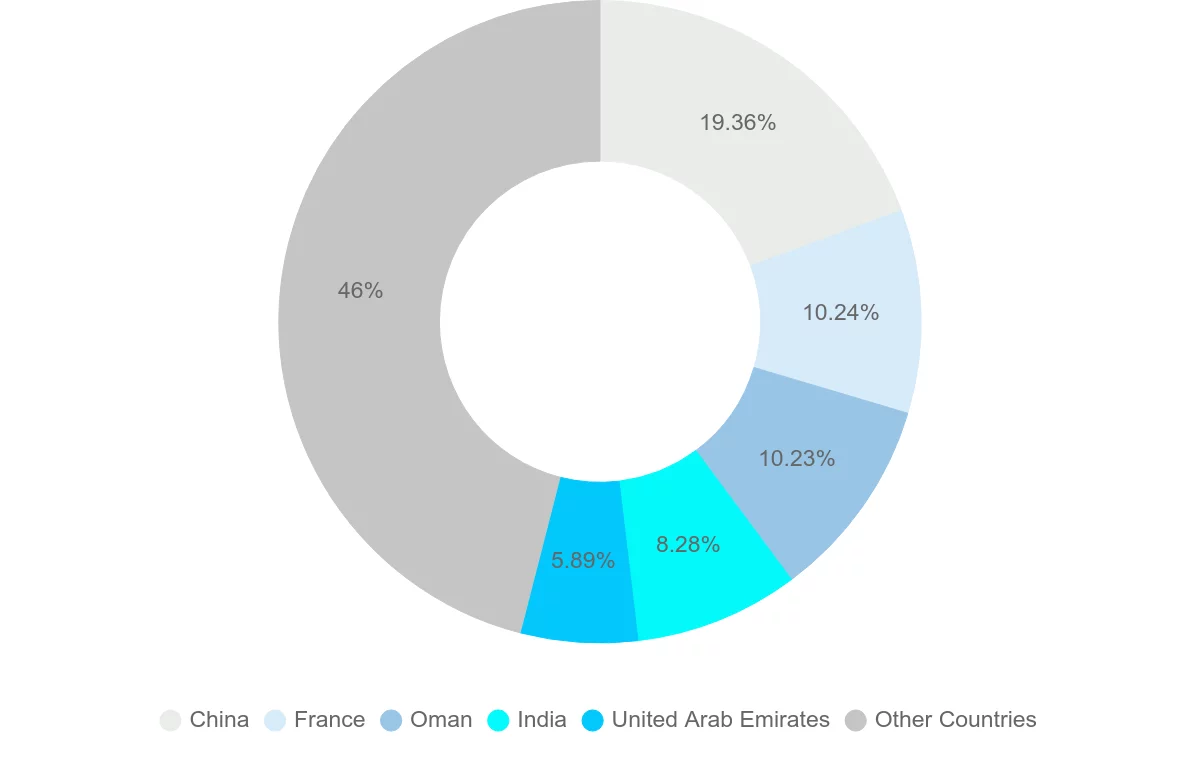 According to the graph, China is the leading import partner of Madagascar, with a trade volume of 854 million US dollars, accounting for 19.36% of Madagascar's total imports. The main categories of goods imported from China include manufactured goods, machinery, and electronic equipment, given China's role as a global manufacturing hub.
France and Oman are the second largest import partners, each contributing an equivalent trade volume of 451 million US dollars which corresponds to 10.24% and 10.23% of total imports respectively. The primary goods imported from France are machinery, food products, chemicals, and transportation equipment due to France's diversified economy. On the other hand, Oman, being one of the largest oil producers in the Middle East, exports mostly petroleum products to Madagascar.
India is the fourth largest import partner with trade volumes reaching 365 million US dollars, or 8.28% of Madagascar's total imports. Key import categories from India encompass pharmaceuticals, textiles, and machinery and tools due to India's robust manufacturing sector. Lastly, the United Arab Emirates holds the fifth position, providing goods worth 260 million US dollars, equivalent to 5.89% of total imports. Madagascar’s import from the UAE mainly consists of crude oil and petroleum products, in addition to metals like aluminum and copper.
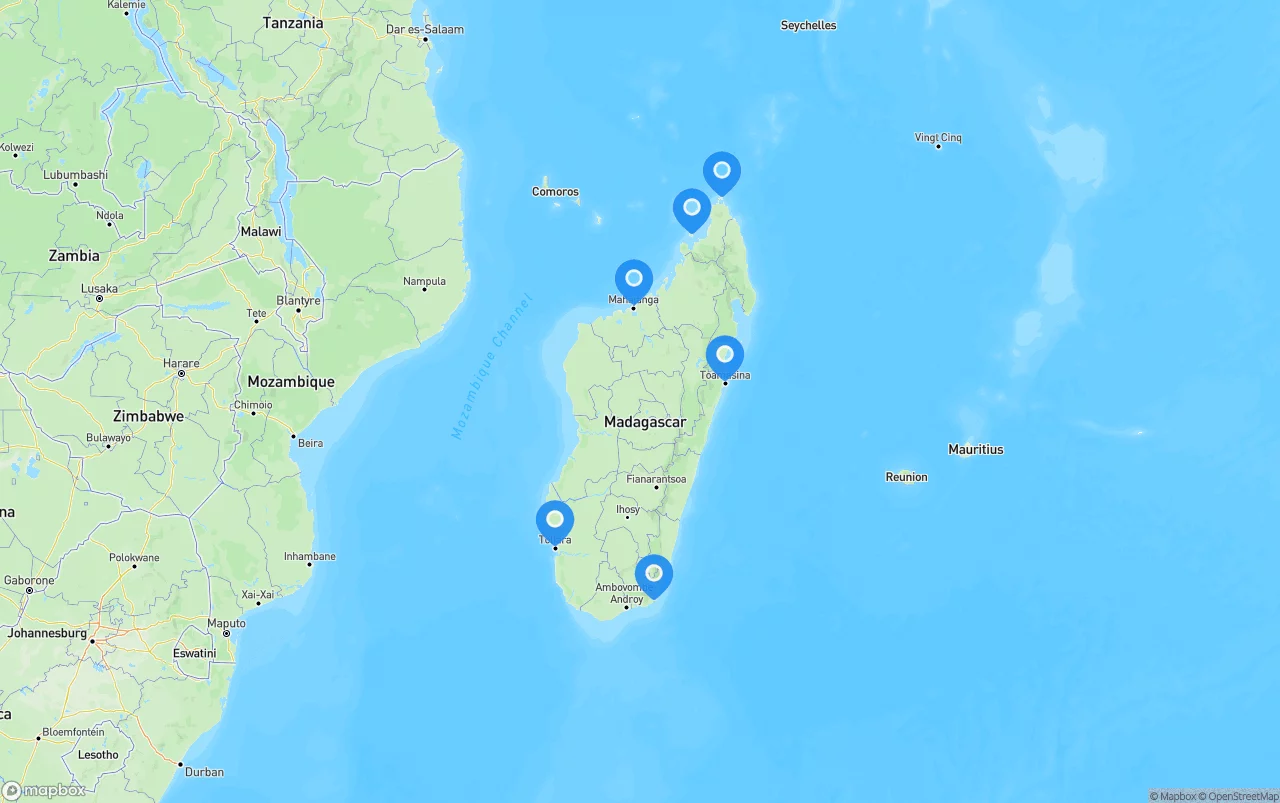 Toamasina Port: Toamasina Port is the largest commercial port in Madagascar, handling a significant portion of the country's imports and exports. It is strategically located on the east coast of the island, making it a key gateway for trade with other countries. The port has modern facilities for handling containers, bulk cargo, and general cargo.
Antsiranana Port: Antsiranana Port, also known as Diego Suarez, is located in the northern part of Madagascar. It is primarily a commercial port, handling both imports and exports. The port has a natural deep harbor, making it suitable for large vessels. Antsiranana Port plays a crucial role in facilitating trade with countries in the Indian Ocean region.
Majunga Port: Majunga Port is situated on the northwest coast of Madagascar. It is a major port for both commercial and container shipping. The port has terminals for handling various types of cargo, including containers, bulk goods, and petroleum products. Majunga Port is an important hub for trade with nearby African countries and beyond.
Tolagnaro Port: Tolagnaro Port, also known as Fort Dauphin, is located in the southeastern part of Madagascar. It serves as a key port for exporting minerals and agricultural products from the region. The port has facilities for handling bulk cargo and has attracted investment in recent years to expand its capabilities.
Nosy Be Port: Nosy Be Port is a smaller port located on the island of Nosy Be, off the northwest coast of Madagascar. It mainly caters to cruise ships and tourist boats, as Nosy Be is a popular tourist destination. The port also handles some local trade and fishing activities. Nosy Be Port contributes to the island's economy through tourism and maritime activities.
Additional ports: Toleary Port is a small port on the west coast of Madagascar, primarily used for local fishing and boating activities.
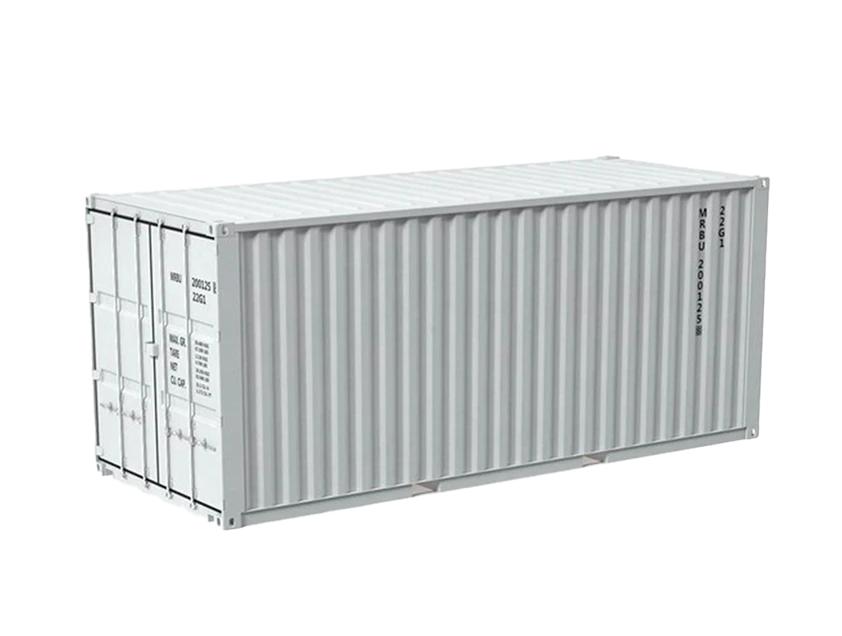
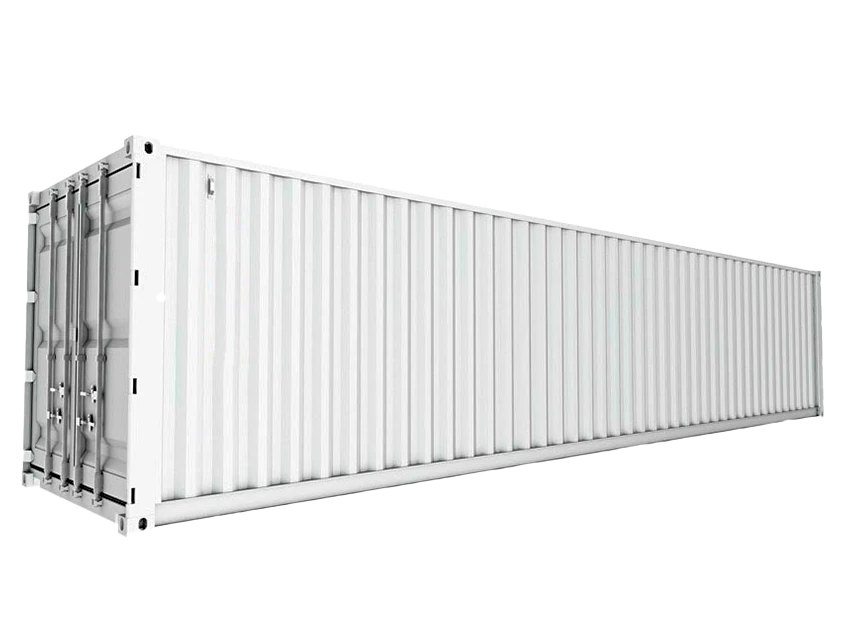
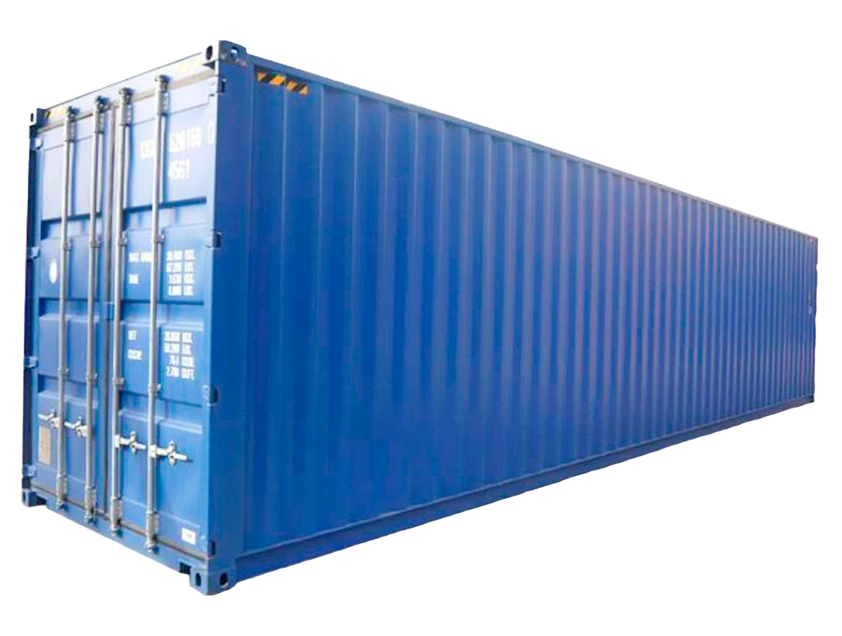
At FWFreight, we offer comprehensive international container shipping services tailored to meet your needs. To Madagascar, we provide efficient and reliable shipping solutions to destinations worldwide. Here's a breakdown of our shipping options:
LCL (Less than Container Load):
For smaller shipments that don't fill an entire container, our LCL service is the perfect solution. We consolidate multiple shipments into one container, saving you time and money. With regular departures to Madagascar, your cargo will reach its destination securely and on schedule.
FCL (Full Container Load):
If you have enough cargo to fill a whole container, our FCL service offers exclusive use of a container. This ensures your goods remain secure and minimizes the risk of damage during transit. Choose to 20 FT, 40 FT, or 40 HC containers, depending on the volume and nature of your cargo.
Air Freight:
When time is of the essence, our air freight service provides swift delivery for urgent shipments. With extensive networks and partnerships, we guarantee efficient handling and timely delivery of your cargo to Madagascar to destinations across the globe.
Below is a table with shipping rates to Madagascar for various types of containers from other countries. You can use these Madagascar Quick Quotes as a guideline. To get an Instant Shipping Rate to Madagascar for the necessary date, you can send a request.
Importing to Madagascar can be an intricate process that requires comprehensive planning and knowledge of specialized duties. Factors such as customs tax, VAT, and CIF (Cost, Insurance, and Freight) value are essential considerations when calculating the cost of importing goods into Madagascar. FWFreight, our company, is dedicated to facilitating effortless imports to the region, ensuring businesses receive the best shipping rates to Madagascar.
Container transportation to Madagascar is a prevalent mode of shipping and offers a safe and cost-effective solution for bulky cargo. Our shipping company is adept at coordinating both Less than Container Load (LCL) and Full Container Load (FCL) shipments to optimize space utilization and improve efficiency. We provide excellent container tracking services to ensure transparency in the shipping process, ensuring our clients are up-to-date with the movement of their goods.
Peculiarities in air transportation to Madagascar entail that it's generally faster but more expensive than sea freight. Air freight is ideal for shipping smaller, high-value goods, especially when urgency is a priority. We meticulously plan air freights to guarantee timely deliveries while endeavoring to offer the most competitive air freight rates. Through strategic partnerships with airlines, we ensure seamless import operations, making Madagascar's geographical isolation no barrier to the successful delivery of your consignment.