Welcome to FWFreight, a strategic partner you can trust for all your freight shipping from Romania to Serbia or for any international shipping needs. We're committed to delivering top-class, value-driven service that sets the industry standard. Our core services seamlessly span across critical areas of logistics - air, sea, rail, and truck transport, along with comprehensive forwarding services. These services are designed to meet the unique needs of a wide spectrum of customers, from domestic exporters venturing into the global market to established international importers seeking efficient logistics solutions.
As a client-centric company, FWFreight prides itself on placing customer satisfaction at the heart of its operations. We're resolved to provide world-class service, ensuring every customer, big or small, receives personalized, efficient, and reliable logistics solutions. We're not just a shipping and forwarding company - we're partners in your success story. A story that begins with a single shipment and grows into a longstanding relationship built on mutual trust and shared success. Our global presence, coupled with our local expertise, endows us with the capability to handle your diverse needs, delivering nothing short of excellence every time.
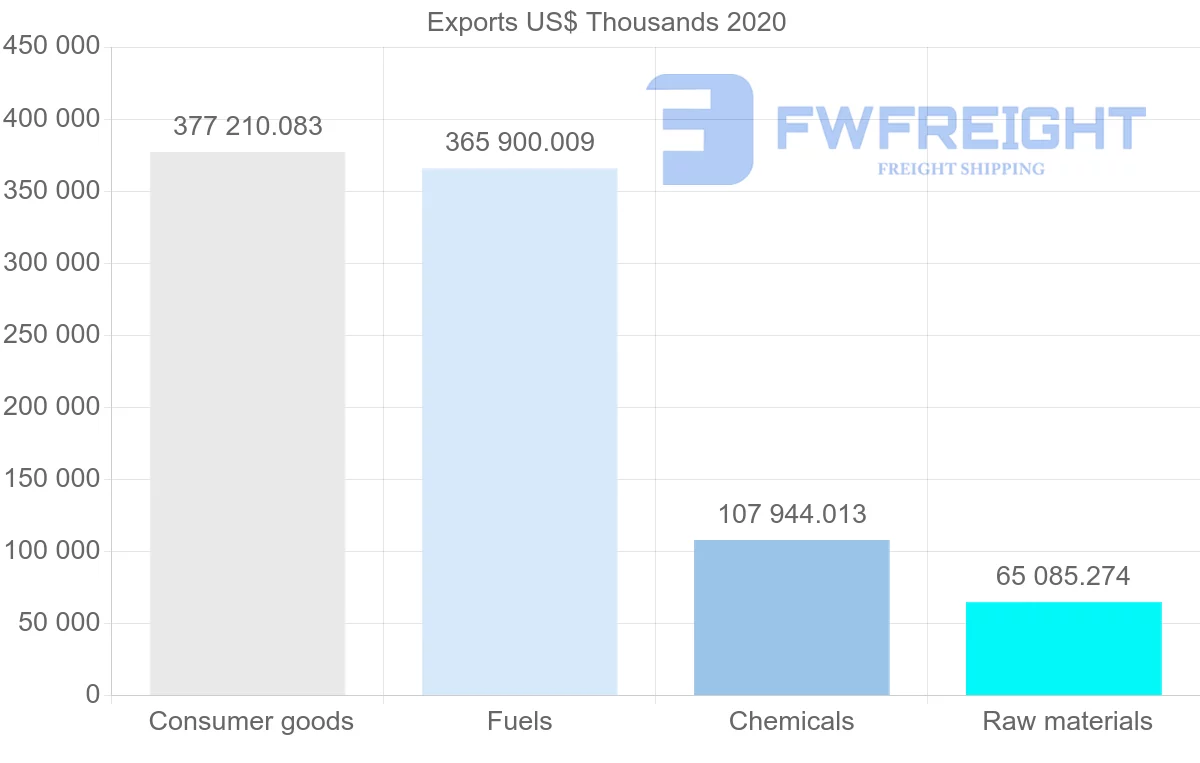 The top 5 export goods from Romania to Serbia in 2020 were consumer goods valued at $377.21 million, fuels at $365.90 million, chemicals at $107.94 million, and raw materials at $65.09 million. Consumer goods, which include items such as electronics and clothing, make up the largest portion of the total export volume, followed closely by fuels and chemicals. Raw materials, such as metals and minerals, also play a significant role in Romania's export market to Serbia.
Exports in these categories are important to Romania as they help drive the country's economy and create jobs in various sectors. Consumer goods are produced in regions with a strong manufacturing base, such as Bucharest and Timisoara, while fuels, chemicals, and raw materials are often sourced from regions with thriving energy and resource industries, such as Constanta and Ploiesti. The export of these goods allows Romania to tap into new markets and diversify its economy, reducing its dependence on any single industry.
These goods are important for import into Serbia as they help meet the country's demand for consumer products, energy resources, and industrial materials. The regions in Serbia where these goods are supplied vary depending on the type of goods involved - consumer goods may be distributed in urban centers like Belgrade and Novi Sad, while fuels and raw materials may be used in manufacturing hubs in Nis and Kragujevac. The import of these goods from Romania helps support Serbia's economic growth and development, while also fostering greater trade ties between the two countries.
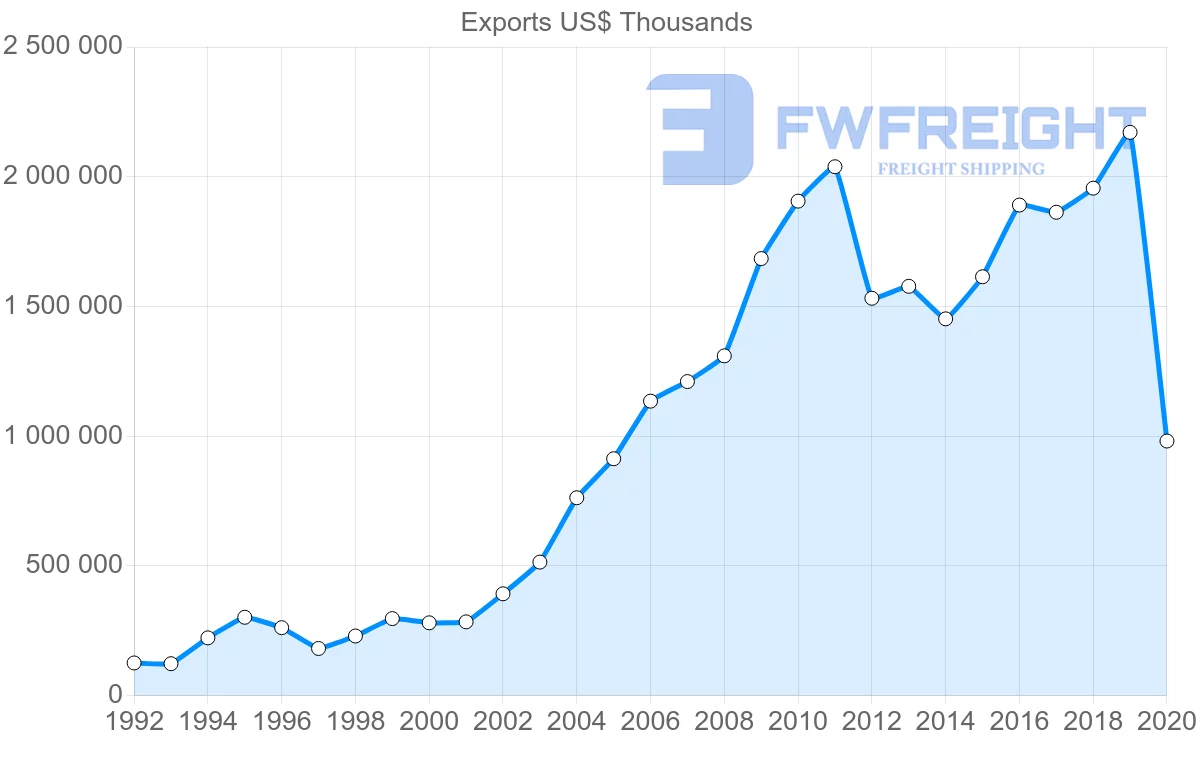 Over the past 28 years, the All Product Export from Romania to Serbia has seen significant growth and fluctuation. Starting at $125.84 million in 1992, the export value reached a peak of $2.17 billion in 2017 before dropping slightly to $981.16 million in 2020. This represents a substantial increase of over 680% from the initial value. Major developments in trade between the two countries include a significant increase in exports around the mid-2000s, followed by a period of steady growth up until 2017. The most notable decline occurred in 2020, likely due to external factors such as global economic conditions or shifts in trade agreements.
The main product groups exported from Romania to Serbia include machinery and mechanical appliances, vehicles, pharmaceutical products, electrical machinery, and mineral fuels. These product groups have consistently formed the bulk of exports over the years, with slight fluctuations in their proportions. Machinery and mechanical appliances have been a dominant export category, indicating Romania's strength in manufacturing and industrial production. The export of vehicles has also been significant, showcasing Romania's automotive industry. Pharmaceutical products and electrical machinery have seen steady growth as well, reflecting the demand for these goods in Serbia. Lastly, mineral fuels have been an important export category, highlighting Romania's natural resources and energy sector.
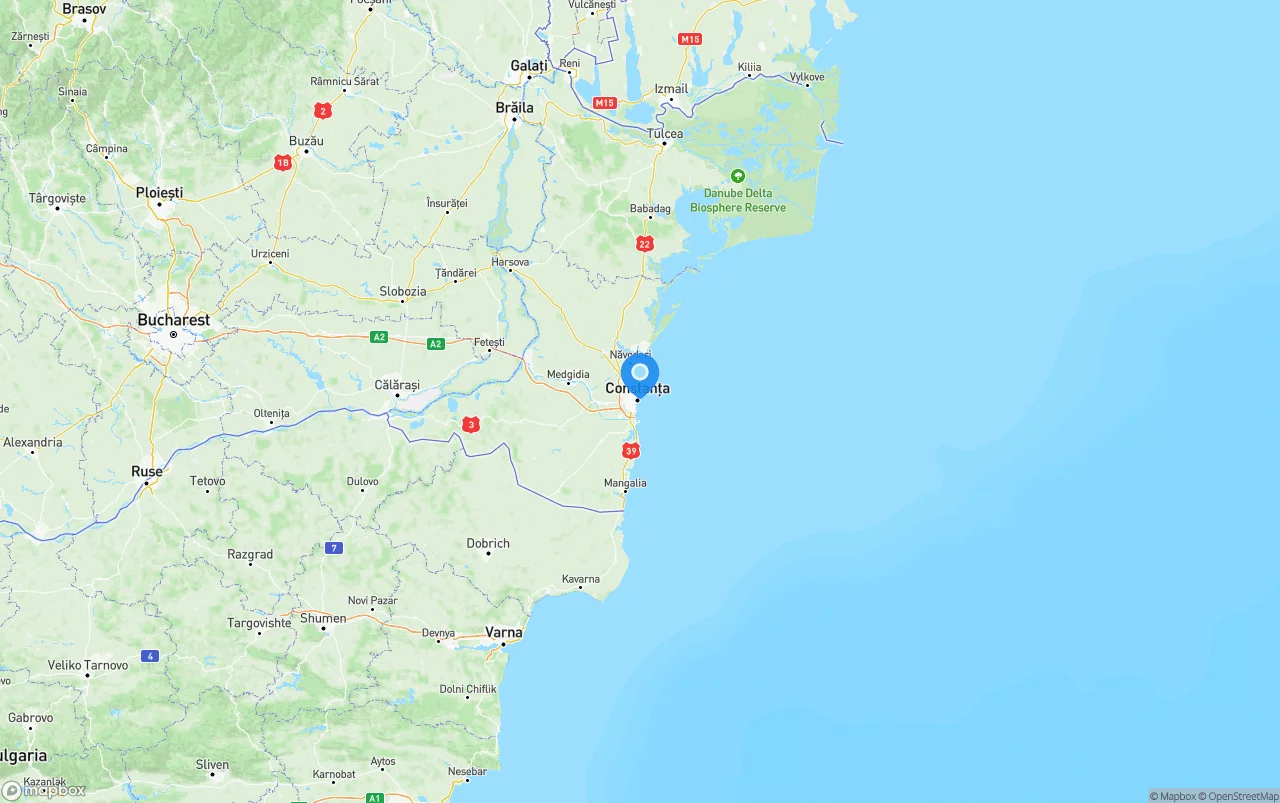 Constanta Port: Constanta Port is the largest port in Romania and one of the busiest ports in the Black Sea region. It is located on the western coast of the Black Sea and serves as a major hub for container traffic, bulk cargo, and oil products. The port has a total of 32 berths and handles a wide range of goods, including petroleum, chemicals, grains, and machinery. Constanta Port plays a crucial role in Romania's economy as a key gateway for international trade.
Basarabi Port: Basarabi Port is a relatively new port located near Constanta Port. It was built to handle the increasing volume of container traffic in the region. Basarabi Port has modern facilities and equipment to accommodate large container ships and is strategically located to serve as a backup to Constanta Port during peak periods. The port is expected to play a significant role in further boosting Romania's maritime trade capacity.
Braila Port: Braila Port is situated on the Danube River and serves as an important hub for inland waterway transport. The port handles a variety of goods, including agricultural products, coal, and construction materials. Braila Port is connected to the Black Sea through the Danube-Black Sea Canal, which allows for seamless transportation of goods between the two water bodies. The port plays a vital role in facilitating trade between Romania and its neighboring countries.
Calafat Port: Calafat Port is located on the Danube River near the border with Bulgaria. The port primarily handles bulk cargo, such as grains, coal, and iron ore. Calafat Port plays a significant role in supporting the agricultural and industrial sectors of Romania by providing a convenient and cost-effective transportation route for goods. The port's strategic location on the Danube River makes it an important link in the country's inland waterway transport network.
Calarasi Port: Calarasi Port is another key port situated on the Danube River in southern Romania. The port specializes in handling various types of cargo, including agricultural products, chemicals, and building materials. Calarasi Port plays a crucial role in facilitating trade with countries along the Danube River, as well as providing a vital connection to the Black Sea. The port's modern facilities and efficient operations contribute to Romania's overall maritime trade capacity.
Other ports in Romania include Galati Port, Tulcea Port, Giurgiu Port, and Isaccea Port.
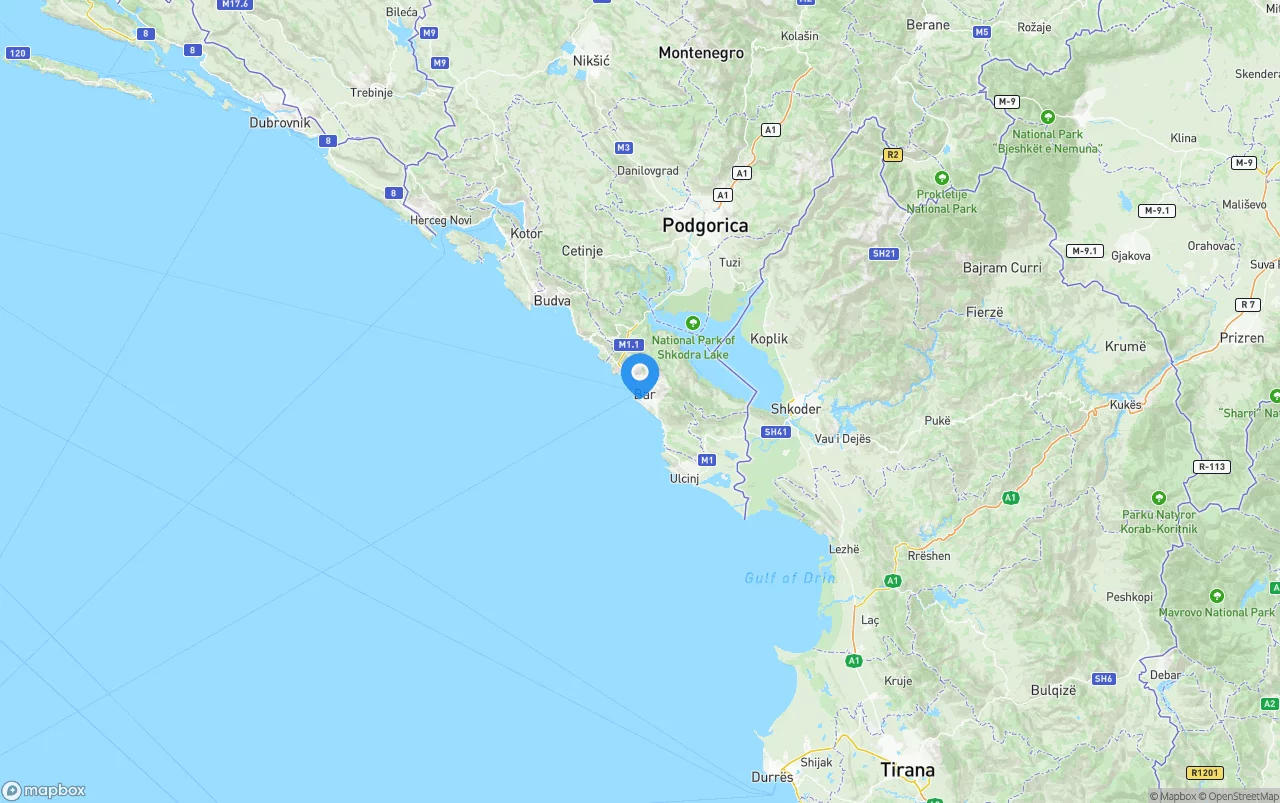 Bar Port: Bar Port is the main seaport in Montenegro, located on the Adriatic Sea. It is strategically positioned for trade between Europe and Asia, making it a key hub for shipping goods. The port handles a variety of cargo including containers, bulk cargo, and Ro-Ro vessels. It is equipped with modern facilities and infrastructure to accommodate large ships and efficiently handle cargo.
Kotor Port: Kotor Port is another important port in Montenegro, known for its picturesque location along the Bay of Kotor. While it is primarily a cruise ship port, it also facilitates cargo transport, particularly for goods destined for the region. The port has seen significant growth in recent years, attracting more cruise ships and boosting tourism in the area.
Novi Sad Port: Novi Sad Port is a major inland port in Serbia, located on the Danube River. It serves as a crucial transportation hub for goods coming in and out of Serbia, as well as for connecting with other countries in the region. The port handles a variety of cargo including grain, coal, and construction materials. Its strategic location and connectivity to the river network make it a key player in the region's trade.
Risan Port: Risan Port is a smaller port located in Montenegro, mainly serving as a marina for smaller vessels and leisure boats. While it may not be as large or bustling as other ports in the region, Risan Port plays an important role in supporting the local tourism industry and providing recreational boating services.
Zelenika Port: Zelenika Port is a commercial port in Montenegro, handling both cargo and passenger traffic. It is located near the town of Herceg Novi and connects Montenegro to other countries along the Adriatic Sea. The port is equipped to handle various types of cargo including containers, bulk cargo, and general cargo. Its strategic location and efficient operations make it an important gateway for trade in the region.
Other ports in Serbia:
- Belgrade Port
- Pancevo Port
Looking for a freight forwarder in Romania and Serbia? There is a list of the best freight forwarders, cargo agents, air, sea, land, river, railroad transport companies, logistics, brokers cargo services in Romania and Serbia. Elevate your business's supply chain effectiveness by selecting the ideal freight forwarding partner.
Maximize your logistics efficiency between Romania and Serbia by partnering with premier freight forwarders. These expert forwarders invest time to deeply understand your unique shipping requirements. Through a personalized and meticulous approach, they guarantee seamless shipment execution across borders, ensuring timely arrivals at every destination.
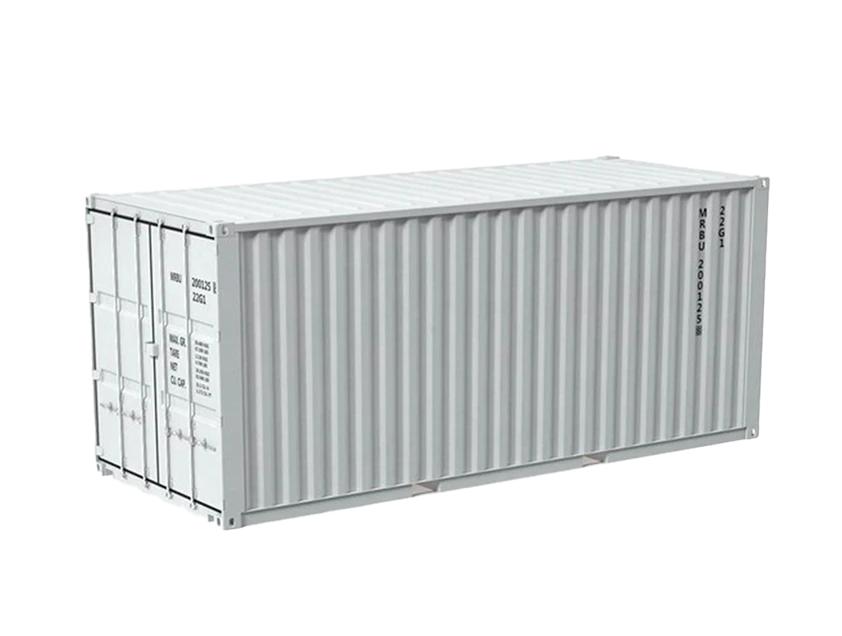
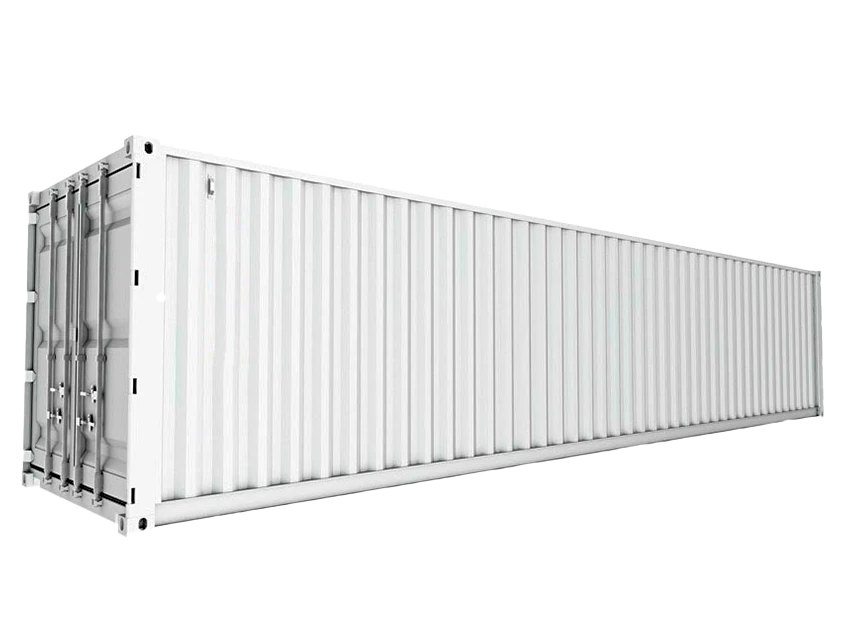
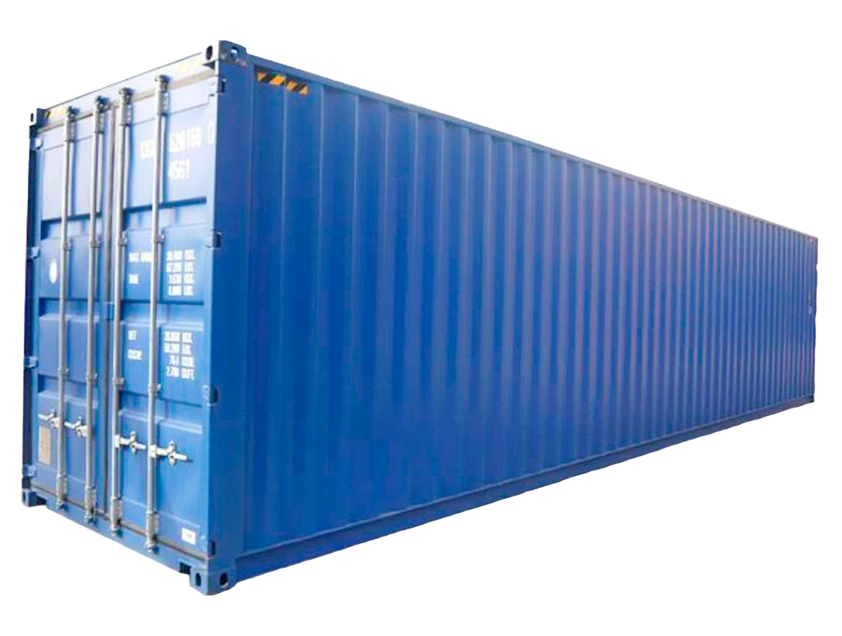
At FWFreight, we offer comprehensive international container shipping services tailored to meet your needs. We provide efficient and reliable shipping solutions from Romania to Serbia. Here's a breakdown of our shipping options:
LCL from Romania to Serbia (Less than Container Load):
For smaller shipments that don't fill an entire container, our LCL service is the perfect solution. We consolidate multiple shipments into one container, saving you time and money. With regular departures to Serbia from Romania. Your cargo will reach its destination securely and on schedule.
FCL from Romania to Serbia (Full Container Load):
If you have enough cargo to fill a whole container, our FCL service offers exclusive use of a container. This ensures your goods remain secure and minimizes the risk of damage during transit. Choose to 20 FT, 40 FT, or 40 HC containers, depending on the volume and nature of your cargo.
Air Freight from Romania to Serbia:
When time is of the essence, our air freight service provides swift delivery for urgent shipments. With extensive networks and partnerships, we guarantee efficient handling and timely delivery of your cargo to Serbia to destinations across the globe.
Below is a table with Shipping Rates from Romania to Serbia for various types of containers. You can use these Quick Quotes from Romania to Serbia as a guideline. To get an Instant Rate from Romania to Serbia for the necessary date, you can send a request.
For container transportation from Romania to Serbia, various factors come into play. The size of the shipping container, the type of goods to be shipped, distance of the destination, and the shipping method (either Full Container Load or Less than Container Load) all directly affect the cost.
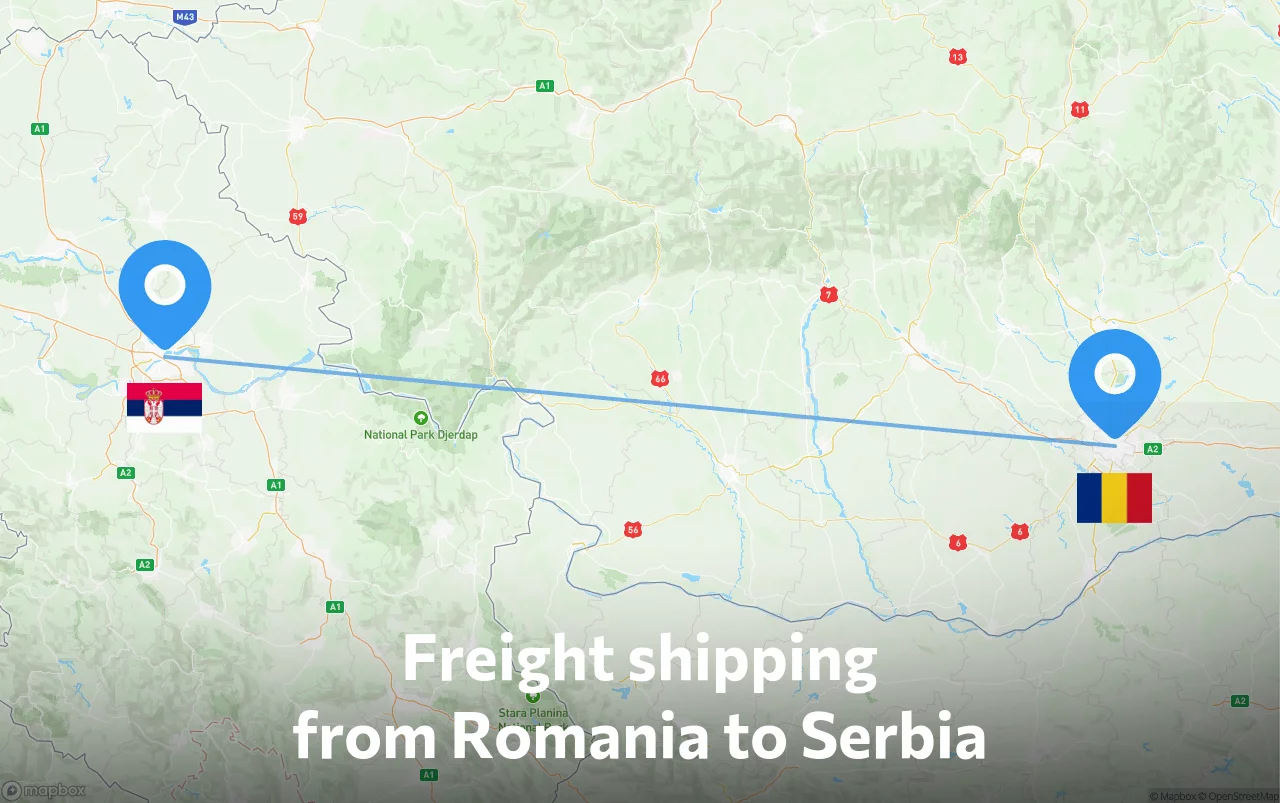 The average transit time for shipping cargo from Romania to Serbia via sea freight typically ranges from 2 to 4 weeks. The distance between the two countries plays a significant role in determining the transit times, with the cargo having to cross the Black Sea and travel through the Danube River to reach its destination. Additionally, factors such as weather conditions, port congestion, and the availability of shipping routes can also impact the overall shipping time. Logistics plays a crucial role in ensuring timely delivery, with efficient planning and coordination between various parties involved in the shipping process.
Customs clearance procedures can also have a significant impact on the overall shipping time from Romania to Serbia. Delays in customs clearance can occur due to documentation errors, inspections, or other unforeseen issues. On average, customs clearance in Romania and Serbia can take anywhere from 2 to 5 days, depending on the complexity of the cargo and the accuracy of the documentation provided. FWFreight is a company that specializes in providing reliable and efficient transport services on the Romania to Serbia route, offering tailored solutions to ensure timely delivery of cargo while navigating customs procedures effectively. Their expertise in logistics and customs clearance can help minimize delays and streamline the shipping process for businesses looking to transport goods between these two countries.
 When it comes to freight shipping to Serbia, FWFreight offers unparalleled services that instill customers with confidence and reassurance. Specializing in import to Serbia, our shipping company has perfected a wide array of logistics services tailored to meet the unique needs of each client. Whether you're a domestic exporter looking to broaden your reach or an international importer seeking a reliable solution, we've got you covered. Our core services encompass sea, air, rail, truck, and forwarding services, ensuring a comprehensive approach to transportation. Regardless of the size or complexity of your shipment, we guarantee a smooth and seamless process, making international shipping to Serbia from other countries a hassle-free experience.
At FWFreight, our commitment to service excellence sets us apart in the global shipping industry. We are dedicated to providing the best service in the world for each and every customer, continually raising the bar in terms of efficiency, reliability, and cost-effectiveness. The versatile nature of our services means that we can handle any type of transportation, providing the best prices without compromising on quality. We understand that in the fast-paced world of international commerce, time is of the essence. That's why we prioritize punctuality and precision in all our operations. Whether you require sea, air, rail, or road transportation, or need assistance with forwarding services, we're here to ensure your shipping needs are met with utmost professionalism.