For seamless and effective freight shipping to Gambia, FWFreight is the go-to expert. We offer specialized logistics solutions tailored to meet diverse client needs, including domestic exporters and global importers, ensuring each shipment to Gambia is handled with utmost efficiency and care. Our core services encompass a spectrum of transportation modes; whether you prefer sea, air, rail or truck, we've got you covered. We pride ourselves on understanding the nuances associated with international shipping to Gambia from other countries and leverage this knowledge to offer you competitive pricing for all types of transportation. Rest assured, when you choose FWFreight, you're choosing a company that understands and puts your unique shipping needs first.
From a service perspective, our company is unparalleled. We have a steadfast commitment to offering the best service in the world, dedicating our efforts to ensuring every customer is more than satisfied. Our shipping company has designed a customer-centric approach, guaranteeing a smooth, easy, and efficient shipping process, no matter the destination or freight size. We are a team of experienced professionals, well-versed in various aspects of the shipping and forwarding industry, and equipped with the skills to navigate the complexities of international shipping. We strive to take the stress out of shipping, allowing you to relax knowing your goods are in the safest hands. Our commitment to excellence is what makes us stand out in the bustling world of freight forwarding.
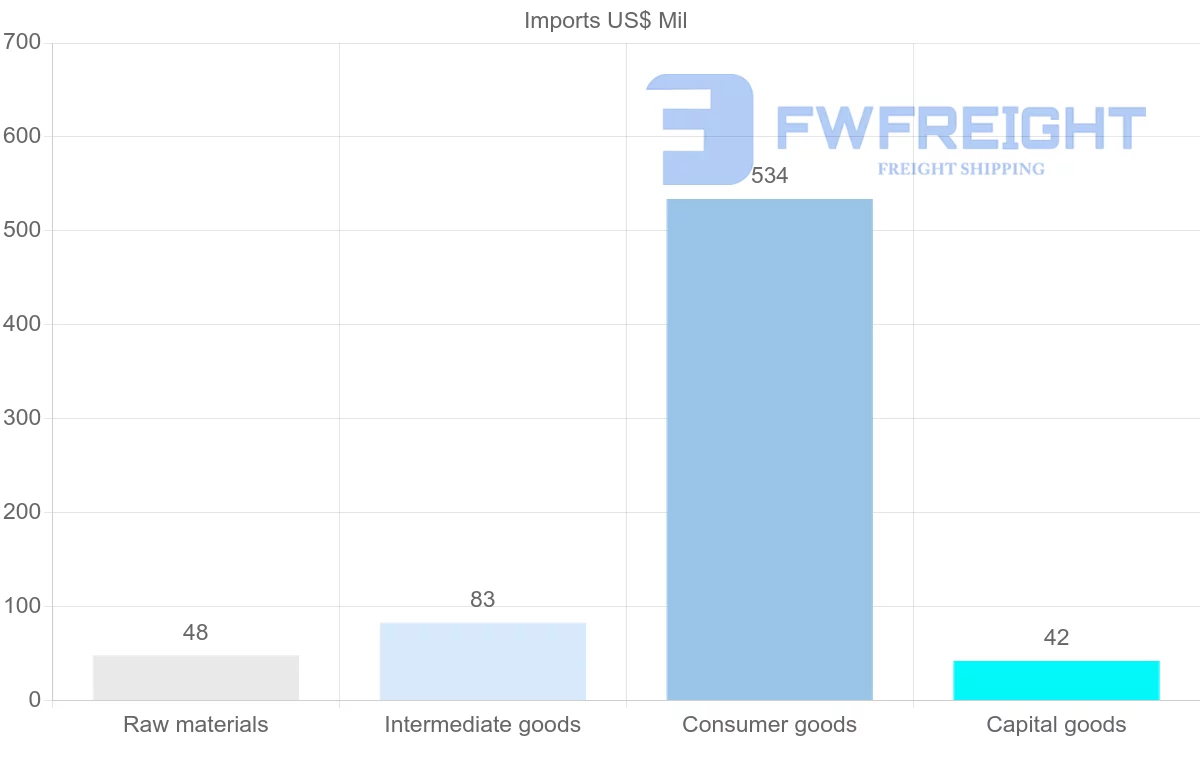 The graph depicts the distribution of Gambia’s top 5 import goods, each represented by a different category. The Raw Materials category, with an import value of 48 million US dollars, contributes 6.74% to the total import volume. Typically, this category includes unprocessed or primary products like minerals, woods, and metals, which are usually utilized in production processes or further manufacturing. Following that, the Intermediate Goods category, which includes semi-manufactured goods like components and parts used for final products, yields an import value of 83 million US dollars, accounting for 11.73% of the overall import volume.
Dominating the graph is the Consumer Goods category, representing tangible commodities consumed by the average individual, such as food, clothing, and electronics. With an impressive import value of 534 million US dollars, this category dramatically overshadows the others, comprising 75.44% of the total import volume. Finally, the Capital Goods category refers to tangible assets that an industry uses to produce goods or services including machinery, tools, and buildings. It contributes 42 million US dollars to the import value, making up 5.95% of the total import volume. In summary, the graph provides a comprehensive overview of the distribution of imports across different product categories, with consumer goods significantly leading the pack.
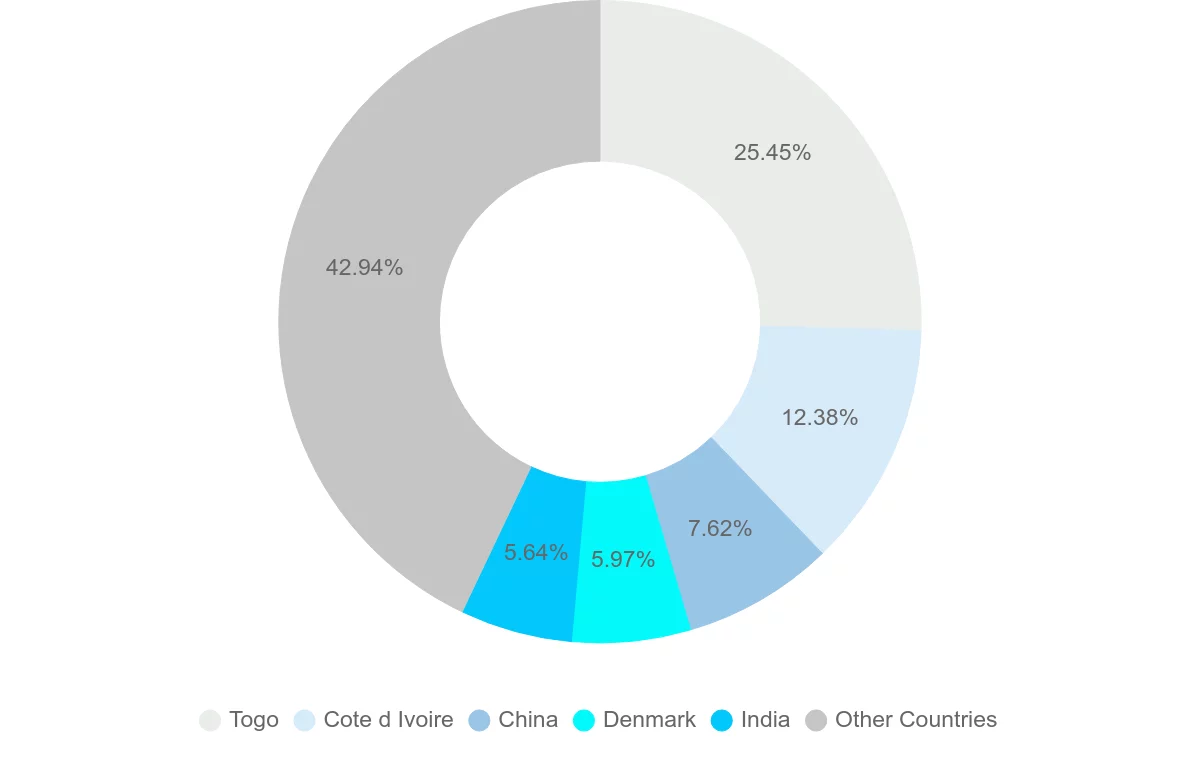 Togo ranks as the top trading partner for Gambia, contributing 25.45% of total trade volume. This is equivalent to a trade value of approximately 180 million US dollars. The key imports from Togo to Gambia encompass a broad range of goods, with the dominant sectors being agricultural products, petroleum products, and other raw materials.
Cote d'Ivoire is the second largest import partner for Gambia, comprising 12.38% of Gambia's total imports or an approximate value of 88 million US dollars. The main imports from Cote d’Ivoire include cocoa, coffee, timber, petroleum, cotton, and bananas. Following Cote d'Ivoire, China contributes to 7.62% of Gambia's imports with a trade volume of about 54 million US dollars. The major categories of goods imported from China comprise electronics, machinery, textiles, and toys. Denmark holds the fourth position among Gambia's top 5 import partners, making up 5.97% of the total imports valued at roughly 42 million US dollars. The primary imports from Denmark are dairy products, machinery, and pharmaceuticals. Finally, India holds a 5.64% share in Gambia's imports, equivalent to a trade value of about 40 million US dollars, with the main imports being textiles, machinery, pharmaceuticals, and agrarian products.
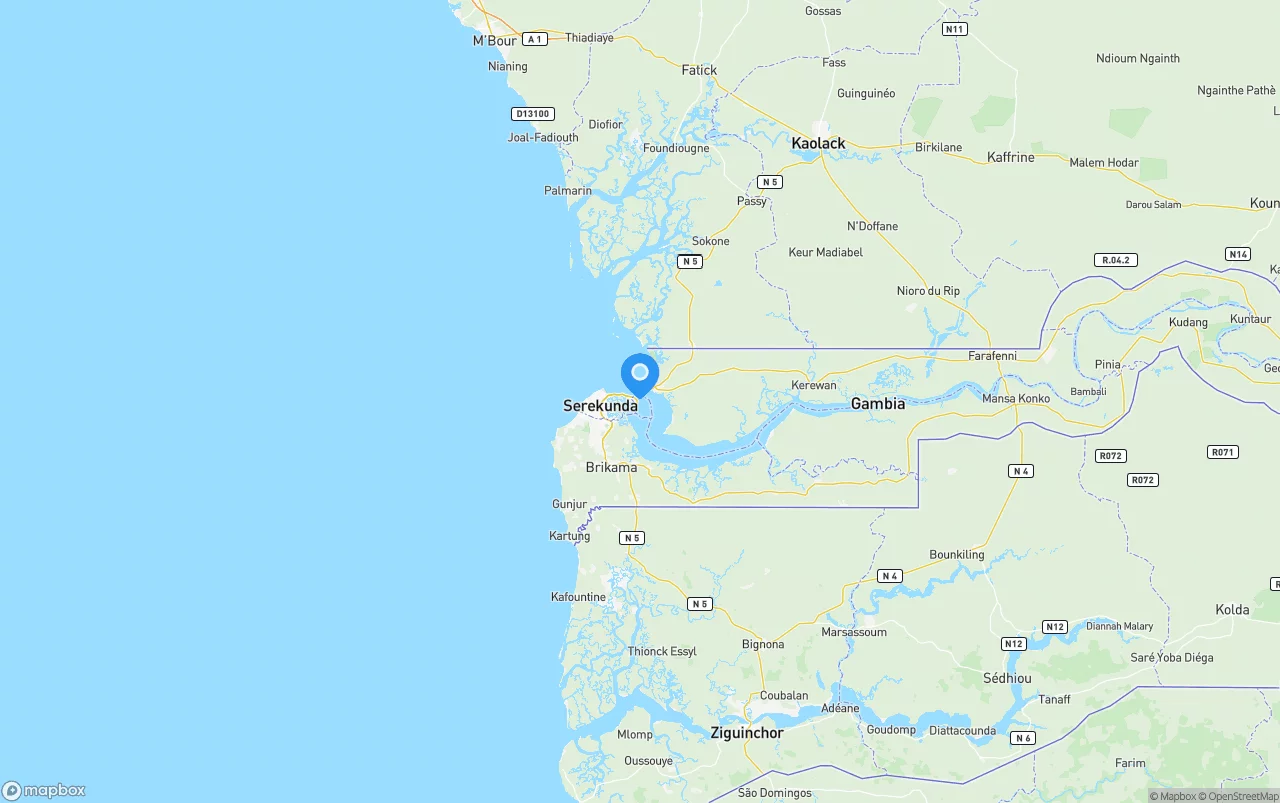 Banjul Port: Banjul Port is the main seaport in Gambia, located in the capital city of Banjul. It serves as the country's primary gateway for international trade and commerce. The port handles a variety of cargo including containers, bulk, and general cargo. Banjul Port is equipped with modern facilities and equipment to handle the growing trade demands. The port plays a vital role in the country's economy, facilitating the import and export of goods.
Gunjur Port: Gunjur Port is a smaller port located in the coastal town of Gunjur. It mainly serves local fishing boats and small vessels. The port is not as developed as Banjul Port and has limited capabilities for handling large cargo vessels.
Georgetown Port: Georgetown Port is another important port in Gambia, located in the town of Georgetown. It serves as a key hub for the export of peanut products, which are a major commodity in the country. The port is equipped to handle bulk cargo shipments of peanuts and other agricultural products.
Barra Port: Barra Port is situated in the town of Barra, on the north bank of the Gambia River. It primarily serves as a ferry terminal connecting Banjul to Barra and facilitates the transportation of passengers and vehicles across the river. The port also handles some local cargo shipments.
Kuntaur Port: Kuntaur Port is a small river port located in the town of Kuntaur. It serves as a key point for the transportation of goods along the Gambia River. The port mainly facilitates the movement of goods to and from the interior regions of the country.
Other ports in Gambia include Sanyang Port, Jufureh Port, and Farafenni Port.
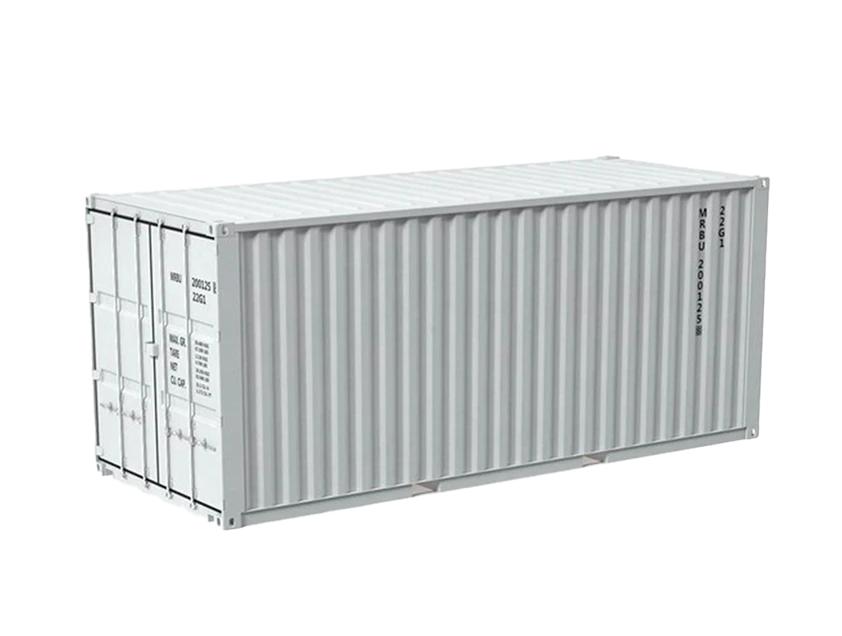
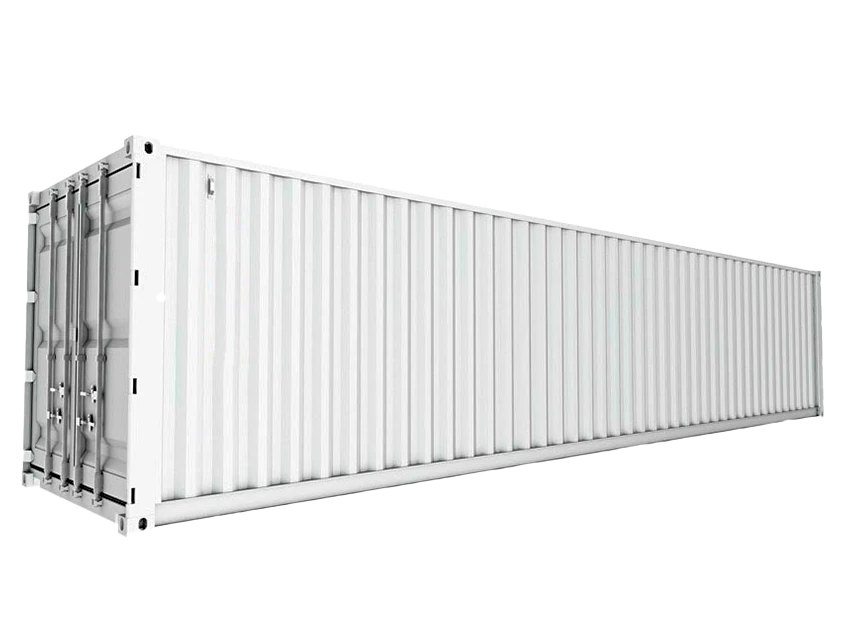
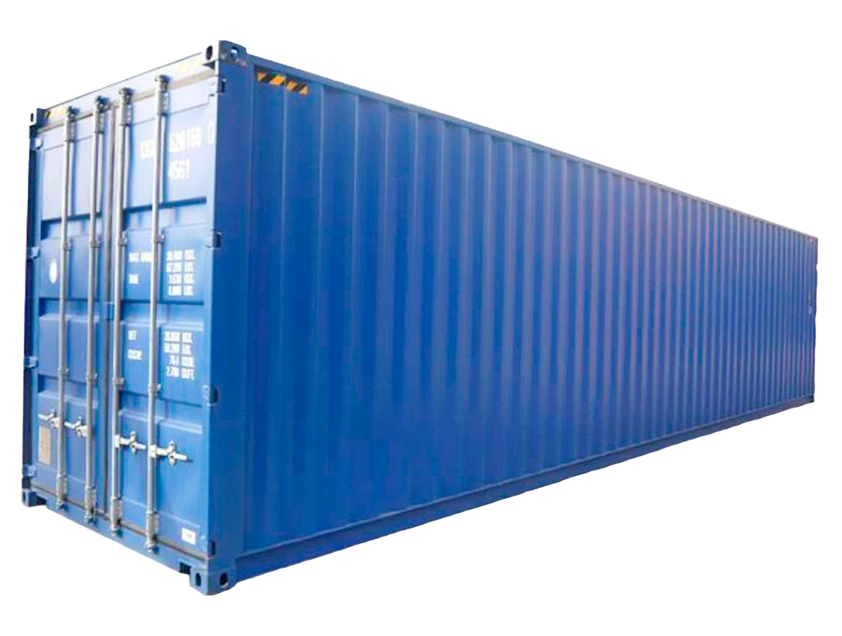
At FWFreight, we offer comprehensive international container shipping services tailored to meet your needs. To Gambia, we provide efficient and reliable shipping solutions to destinations worldwide. Here's a breakdown of our shipping options:
LCL (Less than Container Load):
For smaller shipments that don't fill an entire container, our LCL service is the perfect solution. We consolidate multiple shipments into one container, saving you time and money. With regular departures to Gambia, your cargo will reach its destination securely and on schedule.
FCL (Full Container Load):
If you have enough cargo to fill a whole container, our FCL service offers exclusive use of a container. This ensures your goods remain secure and minimizes the risk of damage during transit. Choose to 20 FT, 40 FT, or 40 HC containers, depending on the volume and nature of your cargo.
Air Freight:
When time is of the essence, our air freight service provides swift delivery for urgent shipments. With extensive networks and partnerships, we guarantee efficient handling and timely delivery of your cargo to Gambia to destinations across the globe.
Below is a table with shipping rates to Gambia for various types of containers from other countries. You can use these Gambia Quick Quotes as a guideline. To get an Instant Shipping Rate to Gambia for the necessary date, you can send a request.
When planning shipments to Gambia, an importer needs to consider several factors to ensure a smooth transition across borders. Foremost, they must be aware of specialized duties, permits, and customs clearance procedures characteristic to Gambia. Knowing these aspects is critical in calculating the total cost of importing to Gambia. Our company, FWFreight, has vast experience with these procedures and offers the most competitive Shipping Rates to Gambia, ensuring all import costs are carefully itemized.
Most imports to Gambia involve container transportation. This process requires the items to be well-packed in standard or specialized containers, depending on the cargo type. The cost, determined by the value, size, and weight of the cargo, also factors in the transport distance and time. Extra costs could arise from customs duties, import taxes, or unexpected storage. Our shipping company handles the logistics of this process with expertise, coordinating timely delivery and minimizing potential extra costs.
Air transportation is another commonly used method when importing to Gambia. It offers the advantage of quick delivery but can be costlier due to higher fuel and maintenance charges. Those who opt for this need to ensure their cargo meets all airline and customs regulations. Moreover, calculating the costs for air freight might require considering fuel surcharges, airway bill fees, and customs duties. By choosing us, not only are all these costs transparently broken down, but clients also benefit from our partnerships with leading air freight carriers.