FWFreight is a premier shipping and forwarding company specialized in offering seamless, cost-effective 'Freight Shipping to Iceland'. We cater to a multitude of diverse shipping needs, be it sea, air, rail, truck or forwarding services. Our core services are designed to ensure that every client, ranging from domestic exporters to international importers, achieves their business objectives. We take immense pride in our expertise in 'international shipping to Iceland from other countries'. Our extensive knowledge in dealing with Iceland's specific import regulations allows us to provide the most efficient and reliable shipment process, assuring customers that they have indeed come to the right place.
From a service perspective, FWFreight firmly believes that every customer deserves the best in the world. Our unmatched service quality reflects in our commitment to exceed customer expectations in every interaction. We offer personalized services designed to meet the specific needs of each client. We aim to drive customer satisfaction by providing competitive prices and unparalleled service for all types of transportation. And while we specialize in shipments to Iceland, our extensive global network enables us to handle logistics requirements in virtually any part of the world. Trust us to be your reliable partner in navigating the complexities of global logistics.
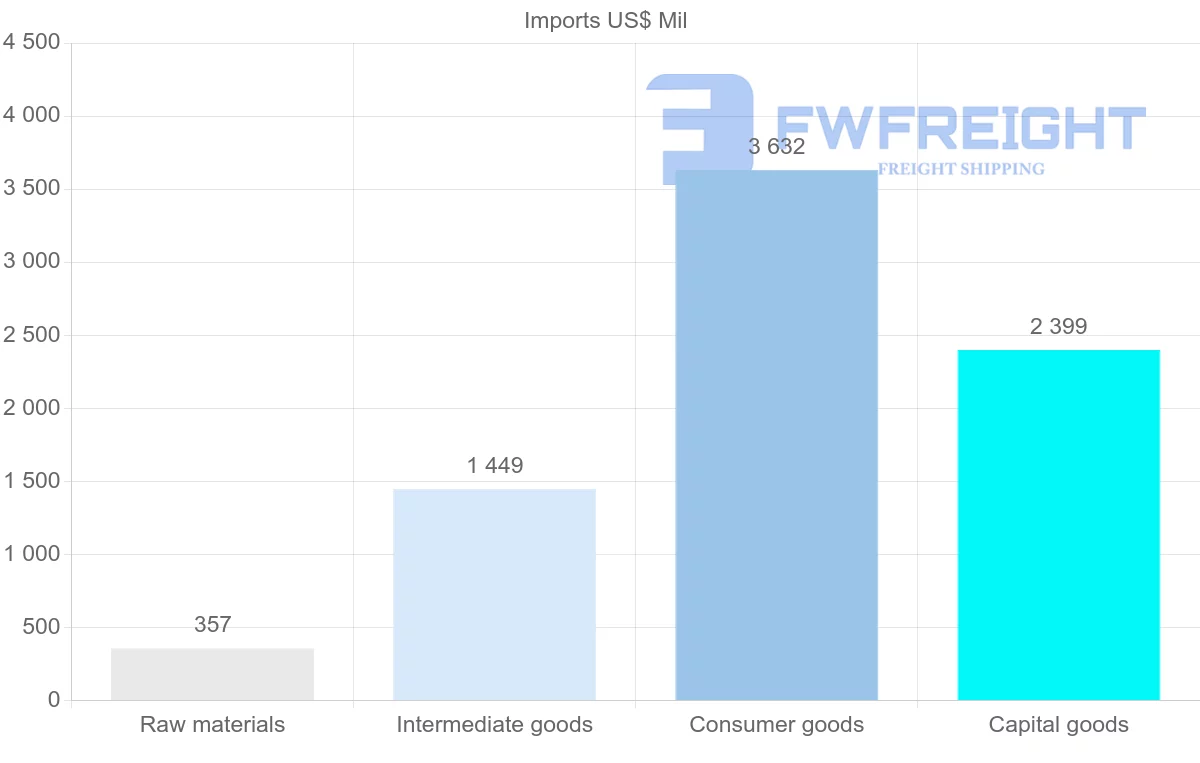 The chart displays the distribution of imports across four different categories in Iceland: Raw Materials, Intermediate Goods, Consumer Goods, and Capital Goods. Raw materials, with an import value of $357 million and a share of 4.56%, are natural resources or substances that are used in the primary production or manufacturing of goods. Intermediate goods, imported at a value of $1,449 million and compromising 18.48% of total imports, are products used in the production process of other goods, but are not final goods themselves.
The largest chunk of imports falls under the Consumer goods category, which amounts to $3,632 million and constitutes 46.34% of the total import volume. These are the final products that are purchased and used by individuals or households, such as cars, food, clothes, and electronics. Lastly, capital goods have an import value of $2,399 million and make up 30.61% of total imports. These goods are not finished goods but are used to produce other goods. They are large, substantial purchases by businesses to further productivity, such as machinery, tools, and commercial vehicles. The chart clearly shows that most of Iceland's imports involve products that can be directly sold to consumers, with the less amount allocated to raw materials to produce those goods.
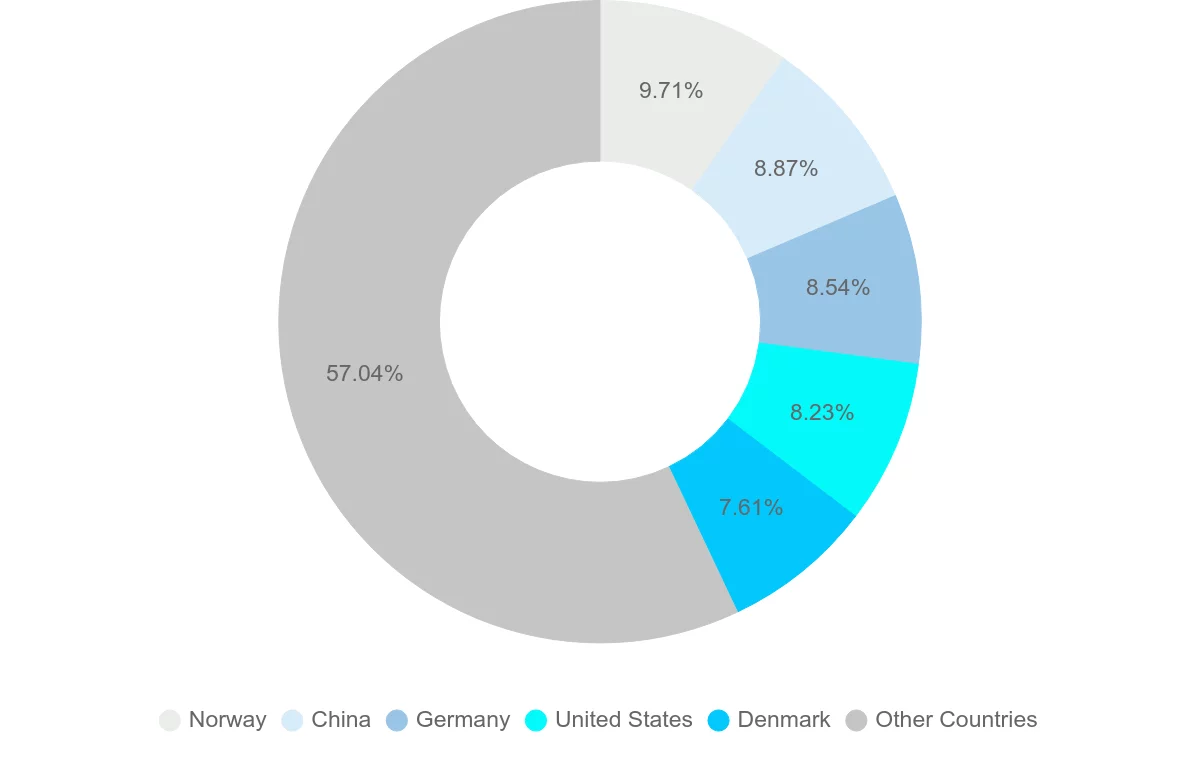 Iceland's top 5 import partners include Norway, China, Germany, the United States, and Denmark. The highest trade volume is experienced with Norway, amounting to 761 million US dollars, accounting for 9.71% of Iceland's total imports. Major goods imported from Norway include petroleum, machinery, and seafood products. Following Norway is China with a trade volume of 695 million US dollars, contributing to 8.87% of total imports. Among the commodities imported from China are machinery, electronics, textiles, and processed foods.
Germany ranks third among Iceland's Top 5 Import Partners, with a trade volume of 669 million US dollars, accounting for 8.54% of Iceland's total imports. The main categories of goods imported from Germany consist of vehicles, machinery, and pharmaceutical products. The United States, with a trade volume of 645 million US dollars, represents 8.23% of Iceland's total imports, majorly made up of machinery, electronics, and vehicle parts. Finally, Denmark's exports to Iceland amount to 596 million US dollars, making up 7.61% of total imports. Key goods imported from Denmark include machinery, meat and dairy products, and furniture. These five countries play a significant role in Iceland's trade, supplying varied goods that cater to different sectors of the economy.
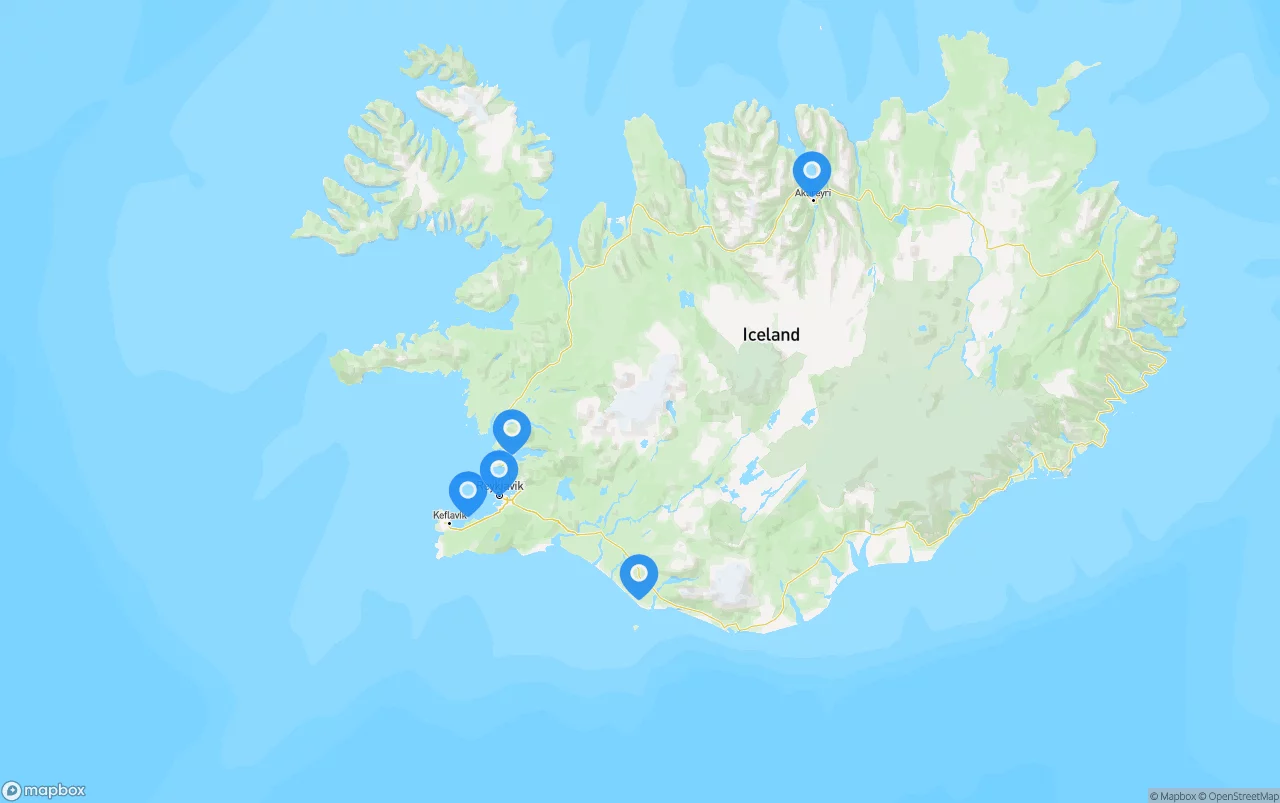 Akureyri Port: Akureyri Port is located in northern Iceland and is the country's largest port outside of the capital area. It serves as an important hub for commercial and cruise ship traffic, as well as fishing vessels. The port handles a variety of cargo, including containers, bulk, and general cargo. Akureyri Port is well-equipped with modern facilities and offers services such as stevedoring, warehousing, and customs clearance.
Grundartangi Port: Grundartangi Port is situated in western Iceland and is primarily a bulk cargo port. It is known for handling large quantities of aluminum and other raw materials. The port features deep-water berths and specialized facilities for the efficient loading and unloading of bulk cargo. Grundartangi Port plays a crucial role in supporting Iceland's aluminum industry and facilitating international trade.
Helguvik Port: Helguvik Port is a relatively new port located on the Reykjanes Peninsula in southwestern Iceland. It is designed to handle container traffic and has the capacity to accommodate large container vessels. Helguvik Port has state-of-the-art container handling equipment and facilities, making it an important gateway for global trade. The port is strategically located near Keflavik International Airport, providing easy access to air cargo services.
Reykjavik Port: Reykjavik Port is the largest and busiest port in Iceland, serving as the main hub for both commercial and passenger traffic. The port handles a wide range of cargo, including containers, general cargo, and cruise ship passengers. Reykjavik Port is equipped with modern terminals, warehouses, and logistics services to support various maritime activities. The port is a key entry point for goods entering Iceland and plays a vital role in the country's economy.
Vestmannaeyjar Port: Vestmannaeyjar Port is located on Heimaey, the largest island in the Vestmannaeyjar archipelago off the southern coast of Iceland. The port primarily serves the local fishing industry and provides essential services for fishing vessels. Vestmannaeyjar Port also welcomes a limited number of cruise ships during the summer months, contributing to the island's tourism sector. The port offers facilities for fish processing, storage, and distribution to support the region's economy.
Other ports in Iceland include Hafnarfjordur Port and Seydisfjordur Port.
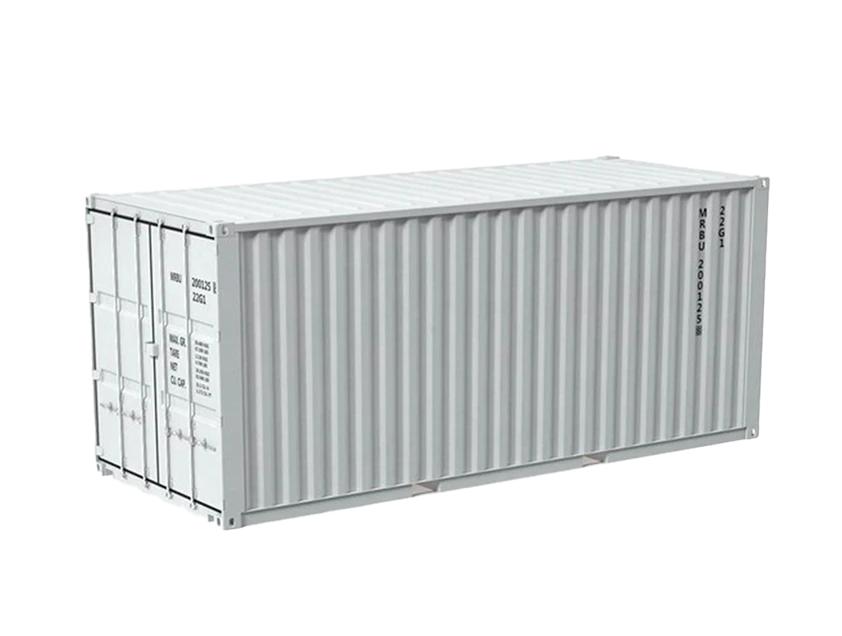
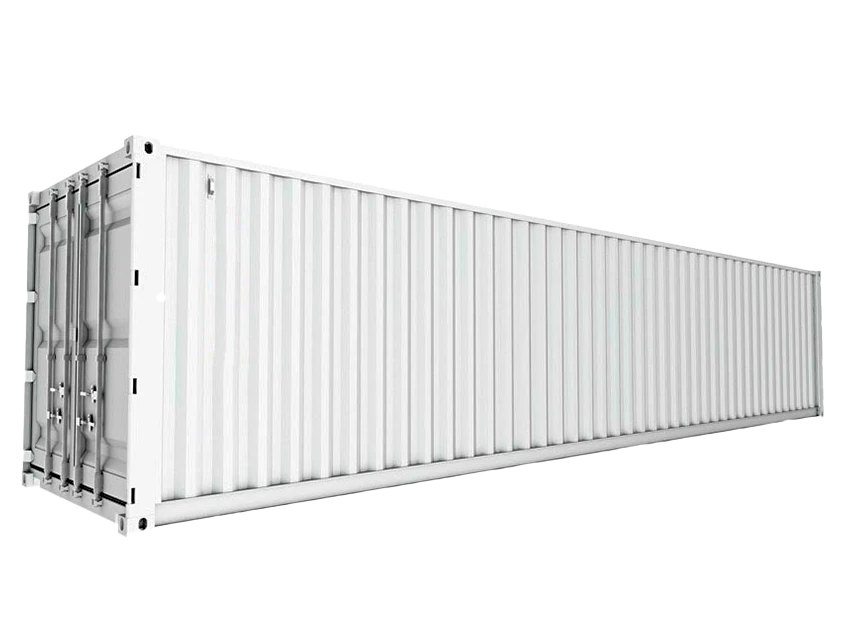
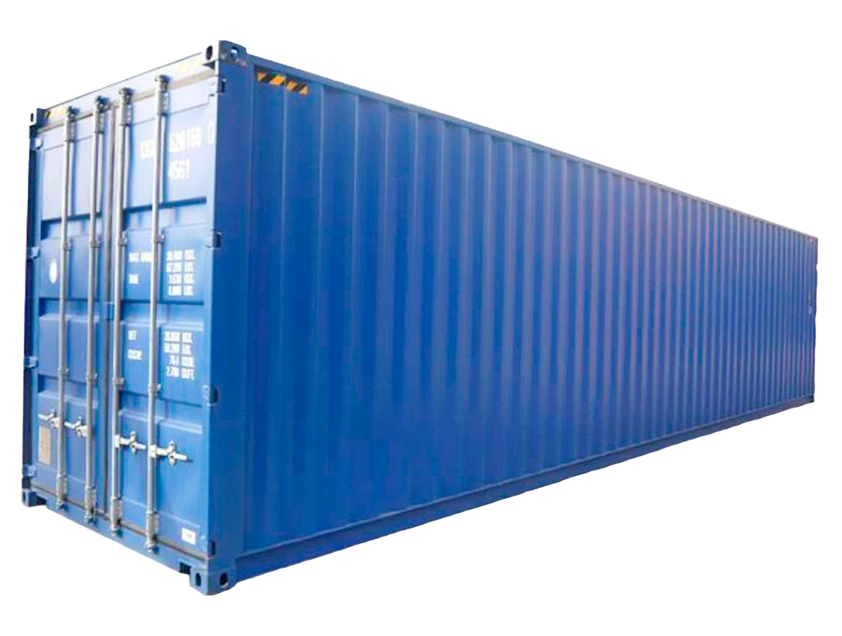
At FWFreight, we offer comprehensive international container shipping services tailored to meet your needs. To Iceland, we provide efficient and reliable shipping solutions to destinations worldwide. Here's a breakdown of our shipping options:
LCL (Less than Container Load):
For smaller shipments that don't fill an entire container, our LCL service is the perfect solution. We consolidate multiple shipments into one container, saving you time and money. With regular departures to Iceland, your cargo will reach its destination securely and on schedule.
FCL (Full Container Load):
If you have enough cargo to fill a whole container, our FCL service offers exclusive use of a container. This ensures your goods remain secure and minimizes the risk of damage during transit. Choose to 20 FT, 40 FT, or 40 HC containers, depending on the volume and nature of your cargo.
Air Freight:
When time is of the essence, our air freight service provides swift delivery for urgent shipments. With extensive networks and partnerships, we guarantee efficient handling and timely delivery of your cargo to Iceland to destinations across the globe.
Below is a table with shipping rates to Iceland for various types of containers from other countries. You can use these Iceland Quick Quotes as a guideline. To get an Instant Shipping Rate to Iceland for the necessary date, you can send a request.
When planning shipments to Iceland, it is essential to consider factors unique to its import system. Iceland is part of the European Economic Area (EEA), which provides an overarching legal framework for legislation on customs and indirect taxation. Our company, FWFreight, provides guidance on these regulations and can assist you in understanding the import duties, taxes, and other fees involved, thus helping to accurately calculate your 'Shipping Rates to Iceland'.
Different transportation methods offer varied advantages. Container shipping is the most cost-effective way to transport goods in large quantities. It provides better security for your goods while also making it possible to ship a variety of goods together. However, it's also important to account for the fact that Iceland imports mostly through its main port in Reykjavík, which might influence routing and scheduling decisions. We have comprehensive knowledge in this area and can assist in making the best choices for your specific needs.
Air transportation to Iceland may be more suited for smaller shipments or time-sensitive goods. Although this method generally costs more, it offers a faster delivery time. Iceland's main airport, Keflavík International Airport, is well-connected to many locations around the world, making air freight a viable option for urgent shipments. Our shipping company can provide advice on the best transportation methods, tailored to your specific needs, ensuring a smooth and efficient import process to Iceland.